
For many Koreans, visiting a hospital is one of the most ordinary parts of life.
If they catch a cold, they go to a clinic.
If their throat hurts, they visit an ENT specialist.
If they need a checkup, they schedule one.
If surgery is necessary, they typically proceed through a system that feels routine and familiar.
Because this process is so common, most Koreans rarely stop to think about how unusual it may appear to outsiders.
For many Americans, however, a visit to a Korean hospital can feel like stepping into an entirely different healthcare universe.
Recently, numerous foreign visitors have shared their experiences online after receiving medical care in South Korea.
Many of these stories have gone viral for one reason:
They simply could not believe how the system worked.
From unexpectedly low medical bills to extremely short waiting times, many Americans describe Korean healthcare as one of the biggest culture shocks they experience while living or traveling in the country.
And surprisingly, the biggest shock often comes before the surgery even begins.
⭐ Key Takeaways
- Many Americans are surprised by how quickly patients can see a doctor in South Korea.
- Walk-in visits without appointments are common at many clinics.
- Medical costs often seem remarkably affordable compared to the United States.
- Hospitals, clinics, and pharmacies are usually located close together.
- Foreign patients frequently describe Korean healthcare as fast, efficient, and patient-friendly.
Why Many Americans Avoid Going to the Doctor
To understand why Korean hospitals leave such a strong impression, it helps to understand the American perspective first.
For many Americans, visiting a doctor is not always a simple decision.
Even for relatively minor illnesses, people sometimes hesitate before seeking medical care.
The reasons vary:
- Concerns about cost
- Insurance deductibles
- Appointment availability
- Long waiting periods
- Administrative complexity
As a result, many Americans develop a habit of waiting things out.
When symptoms appear, their first reaction is often:
“Maybe it will go away in a few days.”
Or:
“I’ll see how I feel tomorrow.”
This mindset is very different from Korea, where visiting a clinic for a sore throat, stomach issue, or persistent cough is often viewed as a normal part of taking care of one’s health.
“If I’m Not Dying, I’ll Just Wait”
One American woman living in South Korea recently shared her experience online.
She explained that she became sick but initially had no intention of visiting a doctor.
In her words:
“My American brain just couldn’t process how normal it is for Koreans to go to the doctor.”
Whenever she mentioned feeling unwell, her Korean coworkers encouraged her to visit a nearby clinic.
She repeatedly refused.
To her, it seemed unnecessary.
After all, she wasn’t seriously ill.
Eventually, however, she gave in and decided to visit a local clinic.
What happened next completely changed her perspective.
Walking Into a Clinic Without an Appointment
One of the first things that surprised her was how simple the process was.
She searched online for a clinic near her.
She walked in.
She checked in at the front desk.
And then she waited.
The total waiting time?
About 15 minutes.
For many Koreans, that sounds completely normal.
For an American patient accustomed to scheduling appointments in advance, it felt almost unbelievable.
She expected paperwork.
She expected bureaucracy.
She expected delays.
Instead, she found herself sitting in front of a doctor shortly after arriving.
Seeing a Doctor the Same Day
The consultation itself was straightforward.
The doctor examined her symptoms and prescribed medication immediately.
No complicated process.
No weeks of waiting.
No lengthy referrals.
No return appointment four weeks later.
She had made the decision to see a doctor that same day and was already receiving treatment.
The efficiency shocked her.
But that wasn’t what left the biggest impression.
The real surprise came when she reached the payment counter.
The $4 Medical Bill
After her consultation, she paid her bill.
The total cost was approximately 4 US dollars.
She genuinely thought there must have been some mistake.
She later joked online:
“In America I’d probably be charged more just for breathing hospital air.”
It was an exaggeration, of course.
But it reflected the scale of her surprise.
For many Americans watching the video, the reaction was the same.
They immediately began comparing that amount to what they might have paid at home.
The Pharmacy Was Right Next Door
Her experience wasn’t over yet.
After leaving the clinic, she walked to a nearby pharmacy.
In Korea, pharmacies are often located in the same building as medical offices or within a very short walking distance.
This convenience impressed her immediately.
There was no need to drive across town.
There was no need to search for an approved pharmacy.
She simply handed over the prescription and waited.
Then she received something else that caught her attention.
The medication was already organized by dosage time.
Breakfast.
Lunch.
Dinner.
Bedtime.
Everything was clearly labeled.
For someone unfamiliar with the system, it felt surprisingly thoughtful.
“Now I Understand Why Koreans Go to the Doctor”
After receiving her medication, she finally understood something she had noticed since arriving in Korea.
Koreans often go to clinics much more quickly than Americans do.
At first, she thought this was excessive.
Now she realized the reason.
The system was simply easier to access.
When healthcare is:
- Convenient
- Affordable
- Fast
people are more likely to seek treatment early rather than waiting until a problem becomes more serious.
This realization was one of her biggest takeaways from living in Korea.
Another American Patient Was Even More Shocked
Another American woman shared an even more dramatic story.
She visited a Korean medical facility because of respiratory symptoms.
Like the previous patient, she did not make an appointment.
When she arrived, she was able to:
- See a doctor
- Receive an examination
- Get a chest X-ray
- Receive a sinus X-ray
- Get an antibiotic injection
- Receive a prescription
All in a single visit.
The entire process took less than an hour.
To her, that alone seemed incredible.
Then she received the bill.
“This Cost Only Eight Dollars?”
The final medical bill came to approximately eight US dollars.
At first, she thought there had been a misunderstanding.
She checked again.
She double-checked the receipt.
Surely something was missing.
How could a consultation, diagnostic imaging, treatment, and medication result in such a low cost?
She immediately shared the experience online.
The video quickly spread among foreign viewers.
Thousands of comments followed.
Many Americans expressed disbelief.
Others began calculating what a similar visit might cost in the United States.
The differences were eye-opening.
What Americans Notice First About Korean Healthcare
Interestingly, most foreign patients don’t initially talk about advanced medical technology.
What they notice first is the overall experience.
They mention:
- How quickly they can see a doctor
- How short the waiting times are
- How easily they can access treatment
- How simple it is to obtain medication
The first culture shock isn’t the surgery room.
It isn’t the equipment.
It isn’t even the bill.
It’s the feeling that the entire system seems designed to help patients move efficiently from diagnosis to treatment.
And for many Americans, that alone is remarkable.
But the Biggest Surprise Comes Before Surgery
As impressive as these clinic experiences may be, many foreigners say the real culture shock begins when they are admitted to a Korean hospital.
One American woman preparing for surgery in South Korea expected anxiety, paperwork, and a stressful hospital stay.
Instead, her first major surprise arrived at dinner time.
When the hospital meal tray appeared in front of her, she immediately reached for her phone and started recording.
Because what she saw was nothing like what she expected from hospital food.
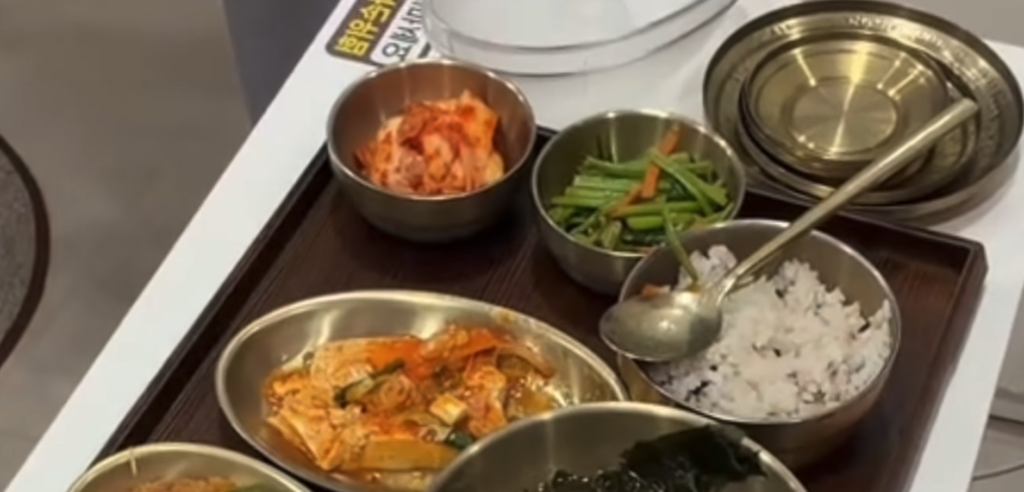
The Hospital Meal That Shocked an American Patient
As she stared at the tray in front of her, she wasn’t sure what surprised her more.
The fact that it looked delicious.
Or the fact that it was being served in a hospital.
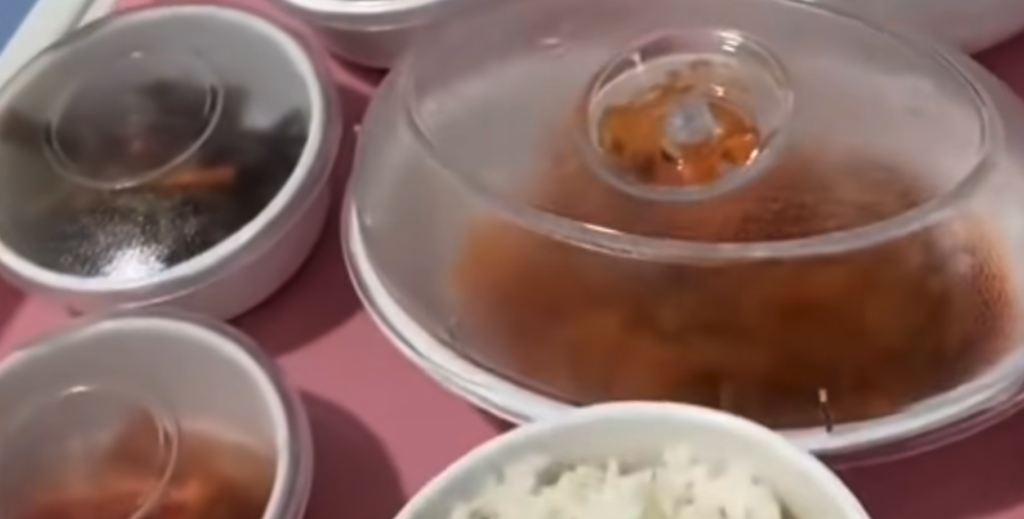
On the tray were a bowl of warm rice, freshly prepared soup, grilled fish, kimchi, and several Korean side dishes.
Everything looked carefully prepared.
Everything looked fresh.
And most importantly, everything looked like a real meal.
Not something quickly assembled and delivered to a patient room.
But a meal that someone expected another human being to genuinely enjoy.
The American patient later explained that she had expected something entirely different.
When she thought about hospital food, she imagined simple meals designed to be functional rather than enjoyable.
Instead, she found herself looking at what appeared to be a balanced Korean home-style dinner.
For a moment, she forgot she was in a hospital.
“This Is Hospital Food?”
The experience became even more surprising when she started sharing photos with friends and family back in the United States.
Many of them had exactly the same reaction.
“Wait, that’s hospital food?”
“That looks better than what I eat at home.”
“Are you sure you’re in a hospital?”
What surprised international viewers was not simply the variety of dishes.
It was the philosophy behind the meal.
The food seemed designed to help patients recover while still preserving quality, nutrition, and dignity.
To many foreigners, that detail mattered.
Because food becomes particularly important when people feel vulnerable.
And few moments make people feel more vulnerable than the night before surgery.
Why Foreign Patients Notice the Difference
Of course, hospitals in every country try to provide meals appropriate for their patients.
Nutrition matters everywhere.
However, many foreign visitors describe Korean hospital meals as feeling unusually thoughtful.
The emphasis is not only on calories or medical requirements.
Patients often receive meals that include a balance of:
- Rice or grains
- Protein
- Vegetables
- Soup
- Fermented foods
For visitors unfamiliar with Korean cuisine, the meal itself often becomes part of the cultural experience.
Many describe it as one of the most unexpected highlights of their hospital stay.
The Hospital Didn’t Feel Like What They Expected
The meal was only the beginning.
As the American patient spent more time inside the hospital, she began noticing other small details.
The hallways felt organized.
The staff moved efficiently.
Questions were answered quickly.
Appointments happened on schedule.
Nothing felt chaotic.
For someone preparing for surgery, that sense of organization created a feeling of reassurance.
Many foreign patients later describe Korean hospitals using the same words:
Efficient.
Organized.
Comfortable.
Professional.
Another Unexpected Discovery
While exploring the hospital floor, the patient noticed something she never expected to find.
A massage chair.
At first, she thought it was there by accident.
After all, massage chairs and hospitals are not things most people immediately associate with one another.
The sight made her laugh.
She later commented that her image of hospitals had always been simple:
A place where people endure discomfort while waiting to get better.
Yet Korea seemed to approach the experience differently.
Recovery was not viewed solely as a medical process.
It was also treated as a human experience.
“America, Can We Do Better?”
Many foreigners who post videos about Korean hospitals eventually ask the same question.
Not because Korean healthcare is perfect.
And not because every experience is flawless.
But because they encounter small conveniences that add up to something much larger.
When patients can:
- See a doctor quickly
- Receive tests immediately
- Pick up medication nearby
- Stay in a comfortable environment
- Eat nutritious meals
the overall experience feels fundamentally different.
For many Americans, those differences become impossible to ignore.
The Health Checkup Experience That Left Foreigners Speechless
Another part of Korean healthcare that constantly surprises international visitors is the country’s health screening culture.
Many foreigners first encounter Korean health checkup centers after hearing recommendations from coworkers, friends, or travel communities.
What they find often exceeds their expectations.
Rather than visiting multiple facilities, patients frequently move through a streamlined system where different examinations are conducted within the same building.
One foreign visitor described the process as feeling less like a hospital visit and more like a highly efficient operation.
Moving From Test to Test
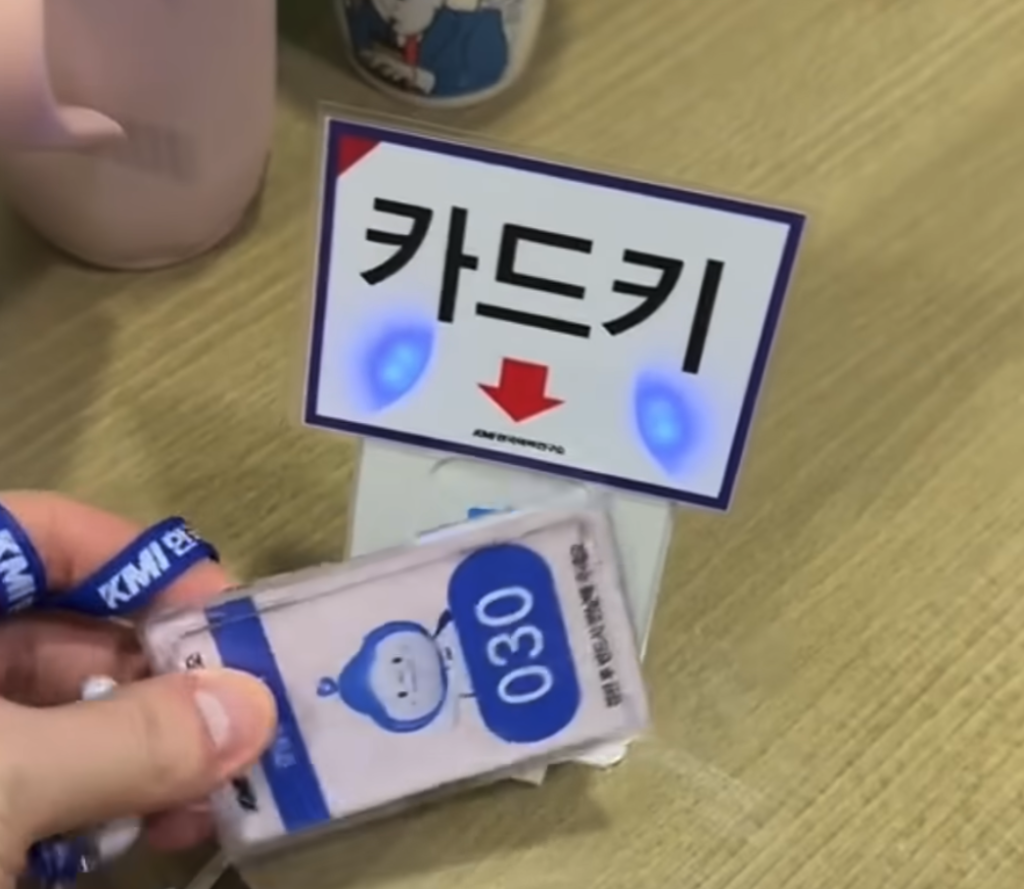
After checking in, he was guided through a series of examinations.
Vision tests.
Blood work.
Imaging procedures.
Specialized screenings.
Everything seemed coordinated.
There was little confusion about what came next.
There was little waiting compared to what he expected.
Instead of wondering where to go, he simply followed instructions as staff directed him from one station to another.
The experience felt remarkably organized.
The Small Gesture He Never Expected
The final surprise came after the examinations were complete.
Because patients often fast before their health screenings, many finish the process feeling hungry.
The visitor explained that he was expecting to simply leave the building.
Instead, he was offered assistance for a meal after completing the tests.
It was a small gesture.
But for him, it represented something larger.
Someone had thought about the patient’s experience from beginning to end.
Why Foreigners Keep Talking About Korean Healthcare
When foreigners share stories about South Korea’s medical system, they rarely focus on advanced machines or complex procedures.
Instead, they talk about experiences.
The doctor they saw in fifteen minutes.
The clinic they entered without an appointment.
The pharmacy right next door.
The surprisingly affordable bill.
The warm meal before surgery.
The organized health screening center.
Each detail may seem minor on its own.
Together, they create an experience that leaves a lasting impression.
Why Koreans Often Don’t Realize What Makes Their System Unique
Perhaps the most interesting part of these stories is that many Koreans don’t consider any of these things unusual.
They have grown up with them.
A nearby clinic.
Accessible pharmacies.
Fast treatment.
Health screenings.
Hospital meals.
These things feel normal.
But through the eyes of international visitors, ordinary aspects of Korean healthcare suddenly appear extraordinary.
For many Americans, the biggest surprise about South Korea is not the technology, the skyscrapers, or even the food.
It is the healthcare system.
Not because it is perfect.
But because it often feels designed around accessibility, efficiency, and patient convenience.
A doctor visit that takes less than an hour.
A medical bill that costs less than a restaurant meal.
A hospital dinner that feels like home cooking.
A health checkup completed in a single day.
These are the experiences that foreigners continue to talk about long after they leave Korea.
And perhaps that is why so many visitors find themselves saying the same thing:
“I came to Korea expecting great food and impressive technology.”
“I never expected one of the most memorable experiences would be a visit to the hospital.”