
Practical, Honest, and Essential Information You Actually Need
A surgical facelift is one of the most effective procedures for reversing visible signs of aging.
Korea is globally recognized for its advanced facelift techniques, natural results, and highly trained surgeons.
This guide focuses on real, practical information that foreigners genuinely need before getting a facelift in Korea.
◆ 1. What Is a Surgical Facelift?
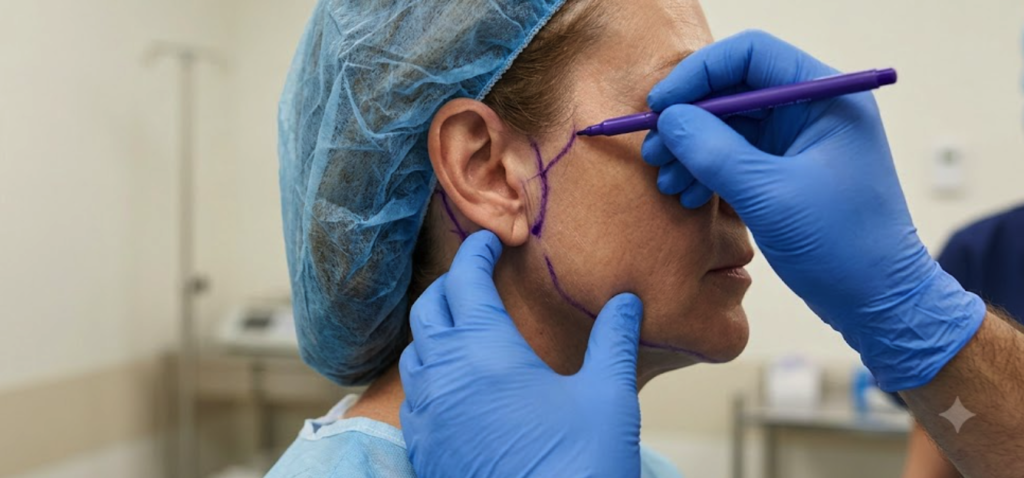
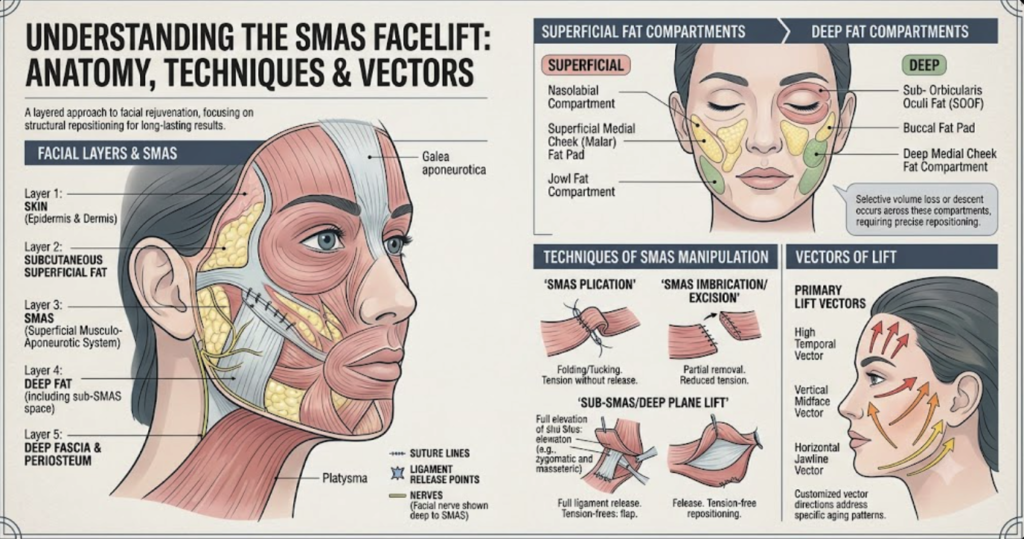
A facelift (rhytidectomy) is a surgical procedure that tightens sagging skin, repositions deeper tissues, and improves facial contours.
✔ Key layers involved
- Skin
- Fat compartments
- SMAS (Superficial Musculoaponeurotic System)
- Deep plane (deeper ligaments and muscles)
Korean surgeons specialize in SMAS and deep-plane manipulation, which creates natural, long-lasting results.
◆ 2. Why Korea Is Popular for Facelift Surgery
Foreigners choose Korea because:
- Surgeons perform high volumes of facelift surgeries
- Natural results are the standard
- Advanced SMAS and deep-plane techniques
- Minimal scarring around the ear
- Shorter recovery time compared to Western clinics
- Transparent pricing
- Modern facilities with English-speaking coordinators
Korea’s facelift philosophy:
Lift deeper tissues, not just pull the skin.
◆ 3. Types of Facelift Surgery in Korea
➤ SMAS Facelift
Repositions the SMAS layer for natural tightening.
➤ Deep Plane Facelift
More advanced; releases deeper ligaments for stronger lifting.
➤ Mini Facelift
Targets lower face; shorter recovery.
➤ Midface Lift
Improves sagging cheeks and under-eye area.
➤ Neck Lift
Tightens neck bands and removes excess skin.
➤ Endoscopic Lift
Uses small incisions and a camera; minimal scarring.
◆ 4. How Korean Techniques Differ from Western Clinics
✔ Smaller, hidden incisions
Korean surgeons hide scars along the ear’s natural curves.
✔ More natural results
Western facelifts sometimes look “pulled.”
Korean facelifts focus on volume repositioning, not stretching.
✔ Faster recovery
Korean clinics use advanced swelling-control protocols.
✔ Lower cost
Korea offers premium results at significantly lower prices.
◆ 5. What Foreigners Should Check Before Choosing a Surgeon
◎ 1) Ask how many facelifts the surgeon performs monthly
Experience matters more than clinic size.
◎ 2) Request before-and-after photos of similar age/skin type
Not just young patients.
◎ 3) Confirm the technique: SMAS or deep plane
Deep plane requires higher skill.
◎ 4) Ask about scar placement
Good surgeons hide scars extremely well.
◎ 5) Check if the clinic has English-speaking coordinators
Communication is crucial.
◎ 6) Avoid clinics offering “too cheap” facelift packages
Low prices can mean inexperienced surgeons.
◆ 6. Surgery Process in Korea
➤ Step 1: Consultation
Facial analysis, skin elasticity check, and surgical plan.
➤ Step 2: Pre-Op Tests
Blood test, ECG, and medical clearance.
➤ Step 3: Surgery
2–4 hours depending on technique.
➤ Step 4: Recovery Room
Monitoring for 1–2 hours.
➤ Step 5: Follow-Up Visits
Stitch removal at 5–7 days.
◆ 7. Recovery Timeline (Honest & Realistic)
✔ Day 1–3
Swelling, tightness, mild discomfort.
✔ Day 4–7
Bruising fades; stitches removed.
✔ Week 2
Most swelling gone; can go outside normally.
✔ Week 3–4
Natural appearance returns.
✔ Month 2–3
Final results visible.
Foreigners should stay in Korea 10–14 days minimum.
◆ 8. Risks & Complications (Realistic Information)
Facelift is safe in Korea, but risks include:
- Bruising
- Swelling
- Temporary numbness
- Hematoma (rare)
- Infection (rare)
- Asymmetry
- Visible scarring (rare with skilled surgeons)
Korean clinics are trained to manage complications quickly.
◆ 9. Cost of Facelift Surgery in Korea
Mini Facelift
₩3,000,000–₩6,000,000
SMAS Facelift
₩6,000,000–₩12,000,000
Deep Plane Facelift
₩10,000,000–₩20,000,000
Neck Lift
₩4,000,000–₩8,000,000
Compared to the US (USD $15,000–$30,000), Korea is significantly more affordable.
◆ 10. How Long Should Foreigners Stay in Korea?
Minimum: 10 days
Ideal: 14–20 days
This allows:
- Stitch removal
- Swelling reduction
- Follow-up checks
- Safe flight home
◆ 11. Tips for Foreign Patients
- Avoid alcohol 1 week before surgery
- Stop blood thinners (doctor approval required)
- Bring loose clothing
- Sleep with head elevated
- Follow all aftercare instructions
- Choose clinics with transparent pricing
Korea offers world-class facelift surgery with advanced techniques, natural results, and highly skilled surgeons.
For foreigners seeking safe and effective facial rejuvenation, Korea remains one of the best destinations worldwide.
✦ Recommended Links
👉 K‑Doctor Interview — https://kdoctorinterview.com/
👉 K‑Beauty Community — https://en.kbeautycommunity.com/