Work-Related Injuries in Korea: A Complete Guide to Industrial Accident Insurance (산재보험) for Foreign Workers

How to get medical treatment, compensation, and legal protection in Korea
Korea has one of the strongest industrial accident insurance systems in the world.
Foreign workers — regardless of nationality, visa type, or job — are protected under Industrial Accident Compensation Insurance, commonly called 산재보험 (San-jae Insurance).
If you get injured at work, you have the right to:
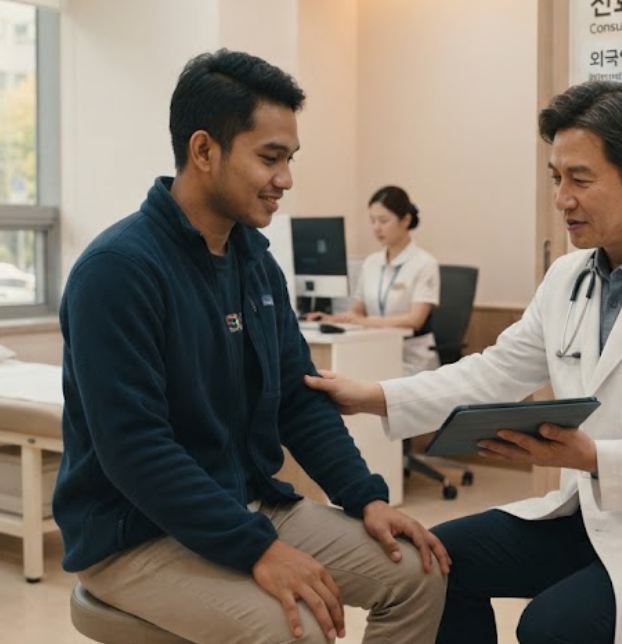
- Free or discounted medical treatment
- Wage compensation during recovery
- Rehabilitation support
- Long‑term disability benefits (if needed)
- Legal protection from unfair dismissal
This guide explains exactly how foreign workers can use 산재보험 in Korea.
⭐ Are Foreign Workers Covered by Industrial Accident Insurance?
Yes.
Foreign workers are fully covered, even if:
- You are not fluent in Korean
- You work in manufacturing, construction, service, or agriculture
- You are on an E‑9, E‑7, H‑2, F‑6, or other visa
- You are a temporary or contract worker
Korean law requires employers to enroll workers in 산재보험.
Even if your employer failed to register you, you are still protected.
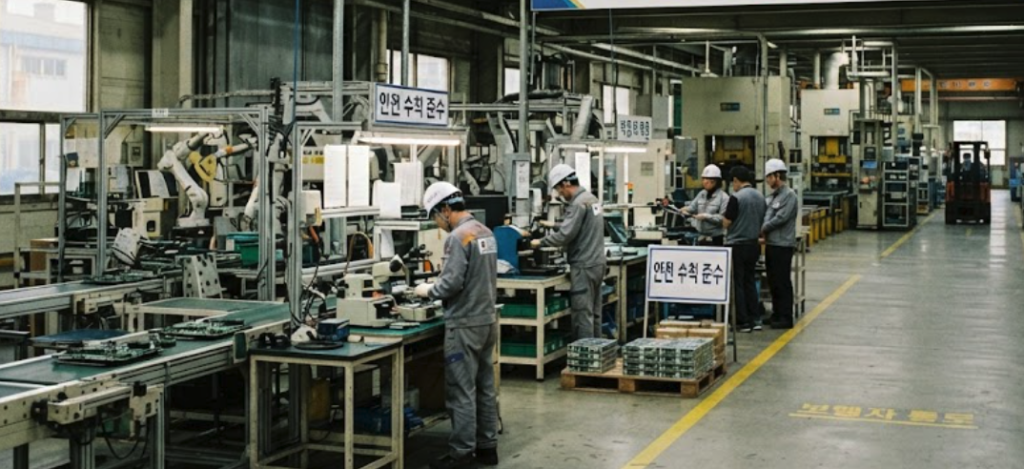
⭐ What Counts as a Work-Related Injury?
The following situations are covered:
1) Injuries during work
- Machine accidents
- Falls
- Cuts
- Burns
- Chemical exposure
- Repetitive strain injuries
2) Injuries while commuting
If you commute directly between home and work, accidents are covered.
3) Work-related illnesses
- Back pain
- Joint injuries
- Hearing loss
- Respiratory issues
- Skin problems
- Heatstroke or cold exposure
4) Mental stress from work
In severe cases, work-related stress or trauma may also be covered.
⭐ What Benefits Do Foreign Workers Receive?
1) Medical Treatment Coverage
Hospital bills, surgery, medication, rehabilitation — all covered.
2) Wage Compensation (휴업급여)
You receive 70% of your average wage during recovery.
3) Disability Compensation
If the injury causes long-term disability, you receive monthly payments.
4) Rehabilitation Support
Physical therapy, occupational therapy, and return-to-work programs.
5) Survivor Benefits
If a worker dies due to a work accident, family members receive compensation.
⭐ What To Do Immediately After a Work Injury
1) Go to the nearest hospital or emergency room
You do not need permission from your employer.
2) Tell the doctor it was a work-related injury
Say:
“This injury happened at work. I need industrial accident insurance.”
3) Keep all documents
- Medical records
- X-rays
- Doctor’s notes
- Receipts
- Photos of the injury
4) Report the accident
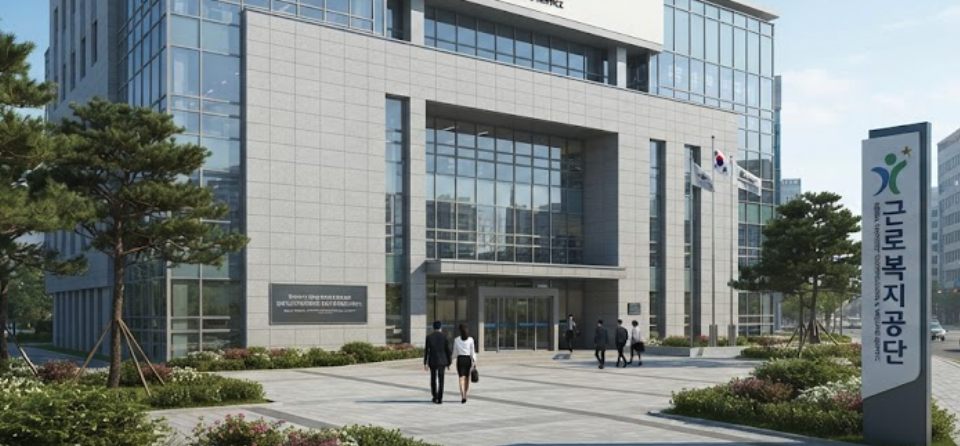
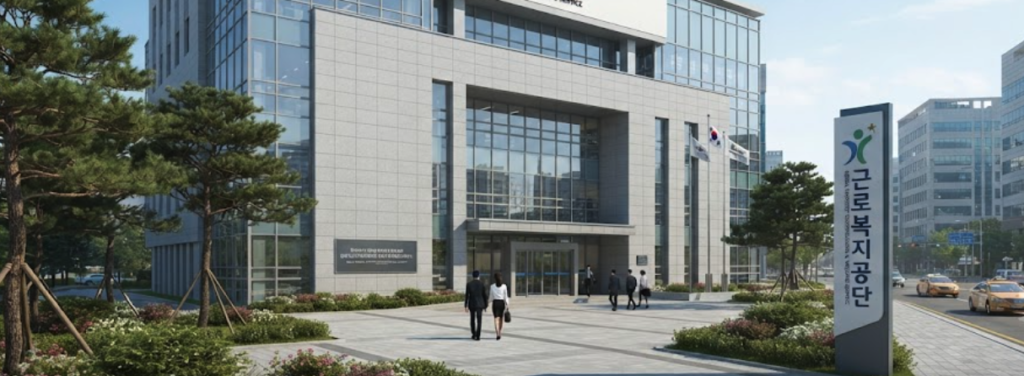
You or your employer must report it to the Korea Workers’ Compensation & Welfare Service (근로복지공단).
If your employer refuses, you can report it yourself.
⭐ How to File a Sanjae Insurance Claim (Foreign Worker Version)
Step 1: Visit a hospital
Receive treatment and get a medical certificate (진단서).
Step 2: Submit a claim to 근로복지공단
You can submit:
- Online
- At a local office
- Through a representative
- With help from a foreign worker support center
Step 3: Provide documents
- ARC (Alien Registration Card)
- Passport
- Employment contract
- Medical records
- Accident details
Step 4: Wait for approval
Most cases are approved within 1–2 weeks.
Step 5: Receive compensation
Payments are sent directly to your bank account.
⭐ What If Your Employer Refuses to Report the Accident?
This is common among foreign workers.
But don’t worry — you still have rights.
You can:
- Report the accident yourself
- Contact 근로복지공단
- Ask for help from a foreign worker center
- File anonymously if needed
Korean law protects workers, not employers.
—
⭐ Can You Be Fired After a Work Injury?
No.
It is illegal for employers to fire or threaten workers because of a work-related injury.
If this happens, 근로복지공단 and the Ministry of Labor can take action.
⭐ Useful English Links for Foreign Workers
Korea Workers’ Compensation & Welfare Service (Industrial Accident Insurance)
English information:
Ministry of Employment and Labor (MOEL)
Foreign worker labor rights:
https://www.moel.go.kr/english
KDCA — Korea Disease Control and Prevention Agency