

A simple, clear guide to Korean pharmacies for foreigners
Korean pharmacies are fast, efficient, and surprisingly easy to use — once you understand how they work.
But for many foreigners, the system can feel confusing at first:
- Why are some medicines behind the counter?
- Why can’t I buy ibuprofen at convenience stores?
- Do I need a prescription for cold medicine?
- How do I ask for what I need in English?
This guide breaks down everything foreigners need to know about Korean pharmacies, including OTC drugs, prescription rules, and what’s allowed.
Quick Answer: Tylenol, Ibuprofen and Claritin in Korea
| Medicine you know | What to ask for in Korea | Where to buy | Prescription? |
|---|---|---|---|
| Tylenol / paracetamol (acetaminophen) | 타이레놀 (taillenol) | Any pharmacy; small packs also at convenience stores | No |
| Ibuprofen (Advil) | 이부프로펜 (ibupeuropen), e.g. 이지엔6, 부루펜 | Pharmacies only (convenience stores sell only children’s ibuprofen syrup) | No |
| Claritin (loratadine) | 클라리틴 or 로라타딘 (loratadin) | Pharmacies | No |
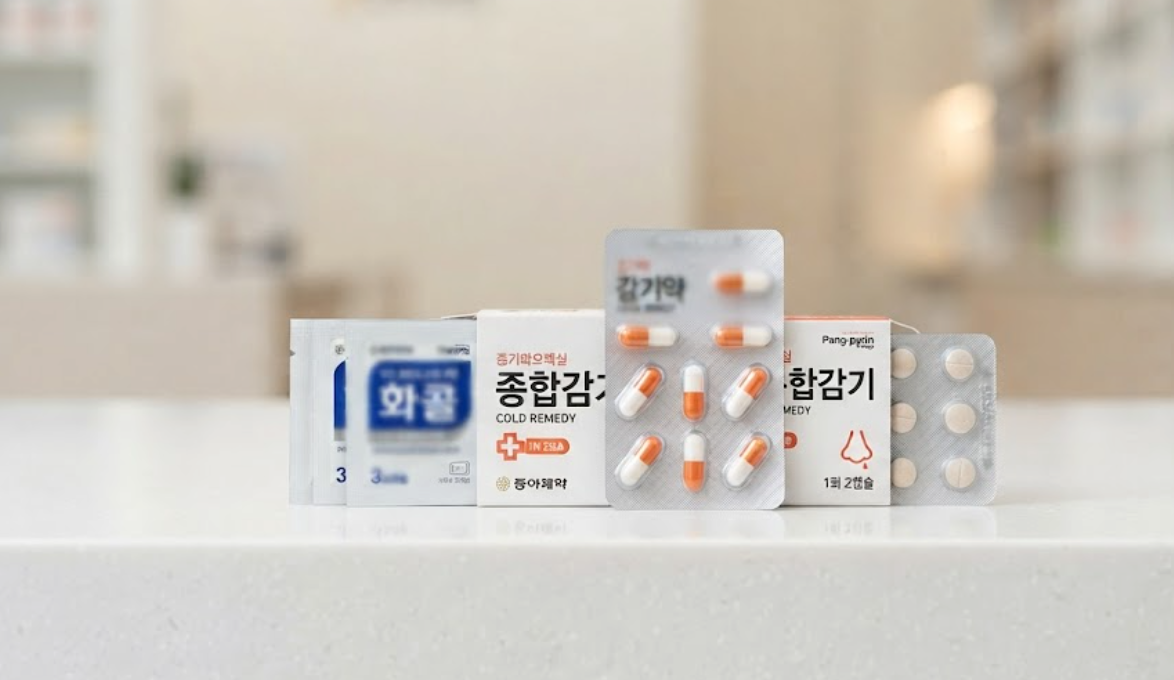
| Cold medicine | 감기약 (gamgiyak), e.g. 판콜에이, 판피린 | Pharmacies and convenience stores | No |
| Antibiotics and stronger painkillers | — | Pharmacies, with a doctor’s prescription | Yes |
- “Paracetamol” is not a common word in Korea. Ask for Tylenol or acetaminophen (아세트아미노펜), or simply show “타이레놀”.
- Convenience stores such as GS25, CU and 7-Eleven sell a short, government-approved list of household medicines 24 hours a day, including Tylenol 500 mg, children’s Tylenol, children’s ibuprofen syrup, cold syrups and digestive tablets. They do not sell adult ibuprofen or allergy medicine.
- Price: a small box of common OTC medicine usually costs a few thousand won.
Show this to the pharmacist: 타이레놀 주세요 (Tylenol, please) · 이부프로펜 있어요? (Do you have ibuprofen?) · 알레르기약 주세요 (Allergy medicine, please)
⭐ Two Types of Pharmacies in Korea
Korea has two pharmacy categories:
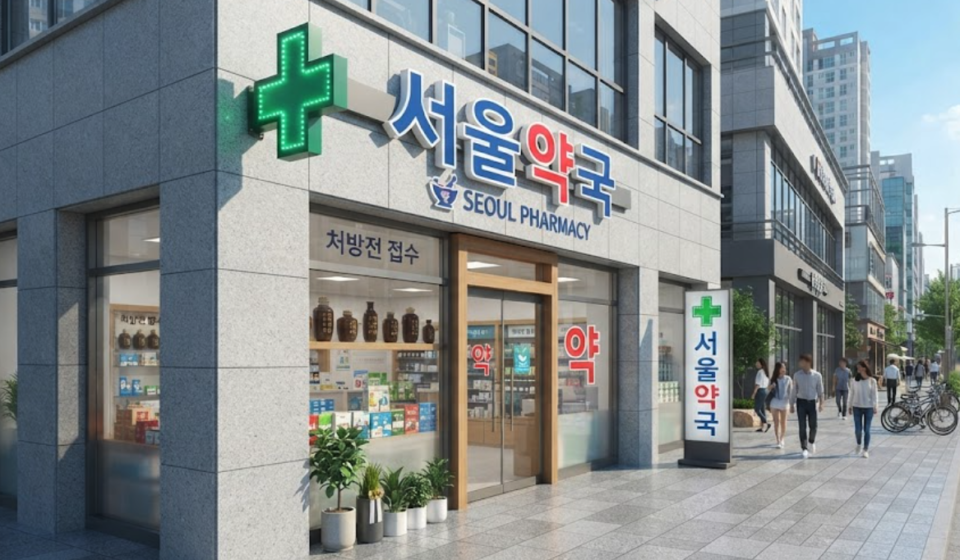
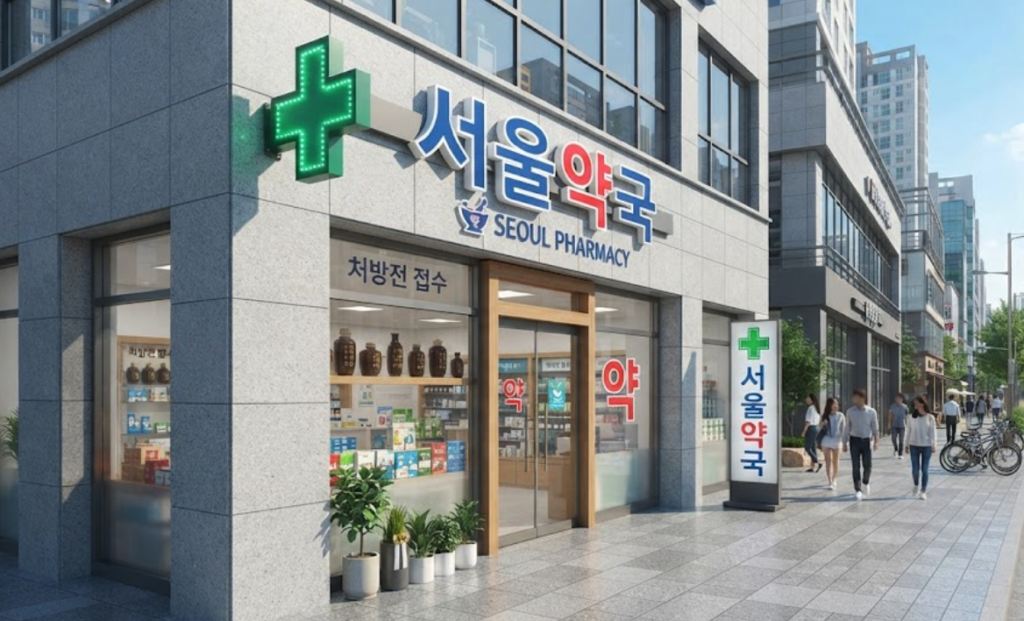
1) 일반 약국 (General Pharmacies)
These are everywhere — near subway stations, clinics, and residential areas.
They sell:
- OTC medicine
- Prescription medicine
- Health supplements
- Basic medical supplies
2) 병원 앞 약국 (Clinic/Hospital Pharmacies)
Located directly next to clinics.
They mainly fill prescriptions.
⭐ OTC Medicine You Can Buy Without a Prescription
Foreigners often expect Western-style drugstores, but Korea separates OTC and convenience-store medicine strictly.
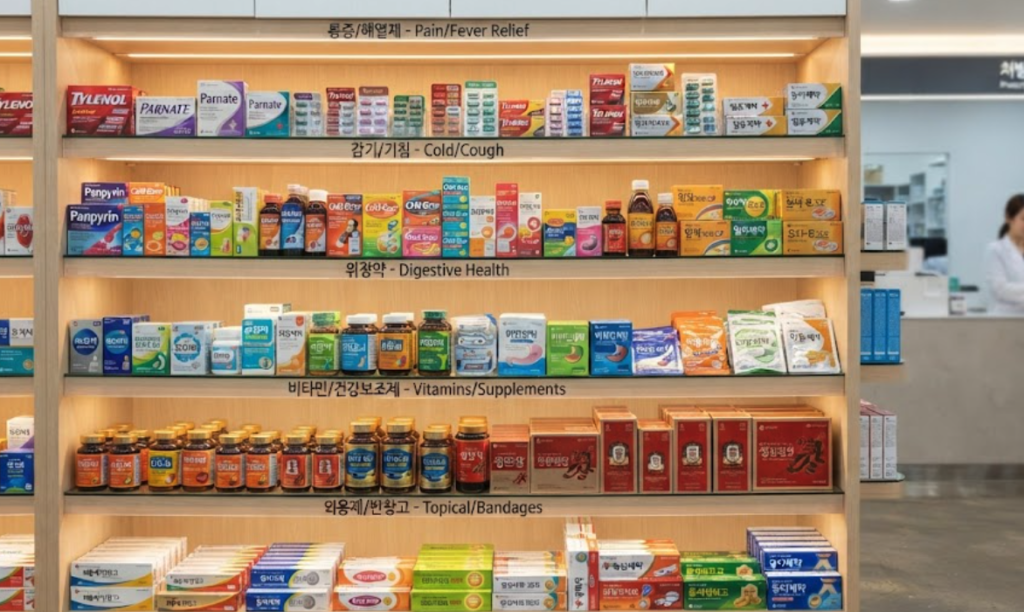
Here’s what you can buy at any pharmacy without a prescription:
Cold & Flu Medicine
- Panpyrin
- Penzal
- Contact 600
- Decolgen
- Cold medicine packs (감기약 세트)
Pain Relievers
- Tylenol (acetaminophen)
- Brufen (ibuprofen)
- Aspirin
- Naproxen (some pharmacies)
Allergy Medicine
- Claritin
- Zyrtec
- Allegra
- Antihistamine tablets (지르텍, 클라리틴 등)
Digestive Medicine
- Gas remedy (Gas Whal Myung Su)
- Antacids
- Digestive enzymes
- Probiotics
- Loperamide (for diarrhea)
Skin Treatments
- Hydrocortisone cream
- Antifungal cream
- Acne ointments
- Burn ointments
Other Common OTC Items
- Eye drops
- Bandages
- Nasal sprays
- Vitamin supplements
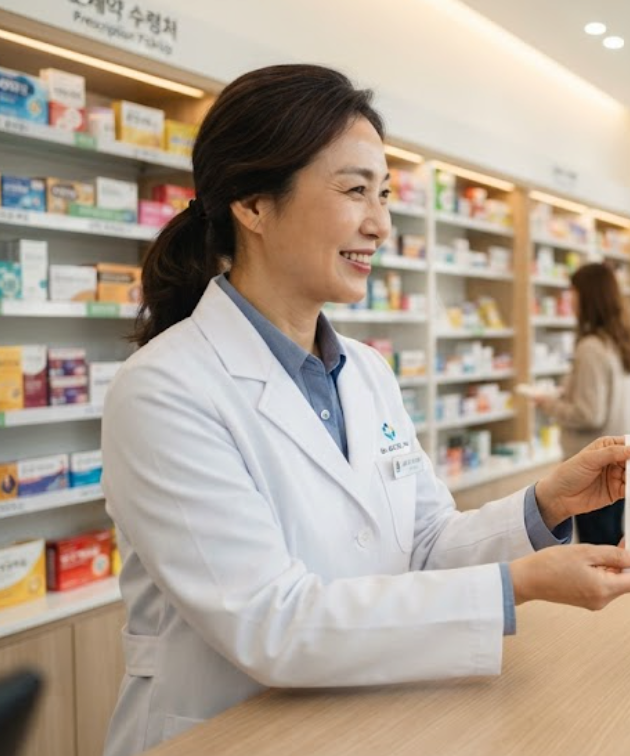
Korean pharmacists often ask about your symptoms and recommend the right product — even if you don’t know the name.
⭐ Medicines That Require a Prescription in Korea
Some medicines that are OTC in other countries are prescription-only in Korea.
Prescription Required:
- Strong painkillers (codeine, tramadol)
- Antibiotics
- Steroid pills
- Sleeping pills
- ADHD medication
- Anxiety medication
- Birth control pills (in some cases, depending on brand)
If you need these, you must visit a clinic first.
The good news: Korean clinics are fast, cheap, and easy to access.
⭐ Can Foreigners Buy Medicine Without NHIS?
Yes.
NHIS is not required to buy OTC medicine.
But NHIS does reduce prescription costs significantly.
⭐ How to Ask for Medicine in English (Useful Phrases)
Most pharmacists understand basic English, especially in Seoul.
Here are simple phrases that always work:
- “Cold medicine, please.”
- “I need allergy medicine.”
- “Something for a sore throat.”
- “Pain reliever, please.”
- “Medicine for stomach pain.”
- “Do you have ibuprofen?”
- “I need eye drops.”
If you want to be extra clear:
- “I have a fever.”
- “I have nasal congestion.”
- “I have diarrhea.”
- “I have a headache.”
Korean pharmacists are used to helping foreigners.
⭐ Convenience Store Medicine (편의점 약)
You can buy very basic medicine at convenience stores like CU, GS25, and 7‑Eleven.
But the selection is extremely limited:
Available at convenience stores:
- Tylenol
- Digestive tablets
- Small cold medicine packs
- Bandages
Not available:
- Ibuprofen
- Allergy medicine
- Antibiotics
- Strong cold medicine
- Skin treatments
For anything beyond basic pain relief, go to a pharmacy.
⭐ How Korean Pharmacies Work (Step-by-Step)
1) Walk in — no appointment needed
Pharmacies are walk-in only.
2) Tell the pharmacist your symptoms
They will recommend the correct medicine.
3) Pay at the counter
Most pharmacies accept:
- Credit cards
- Mobile pay
- Cash
4) Take the medicine immediately
Korean pharmacies often give instructions verbally.
⭐ Useful Official Links (English)
- KDCA — Korea Disease Control and Prevention Agency
- Ministry of Health and Welfare (MOHW)
Related Posts
Discover more from Medi Korea 82
Subscribe to get the latest posts sent to your email.