

If you need the morning after pill in Korea, the first surprise is usually the pharmacy. In many countries you can buy it over the counter, but in Korea the pharmacist will tell you to see a doctor first. I looked into how it actually works here, what it costs and what to say at the clinic, so you don’t lose time when time matters most.
Quick Answer: Can You Get the Morning After Pill in Korea?
- Yes, but only with a prescription. Emergency contraception is classed as a prescription-only medicine in Korea, and that was still the case in 2026.
- Any clinic can prescribe it. A women’s clinic (산부인과, obstetrics and gynecology) is the easiest choice, but general clinics and emergency rooms can prescribe it too.
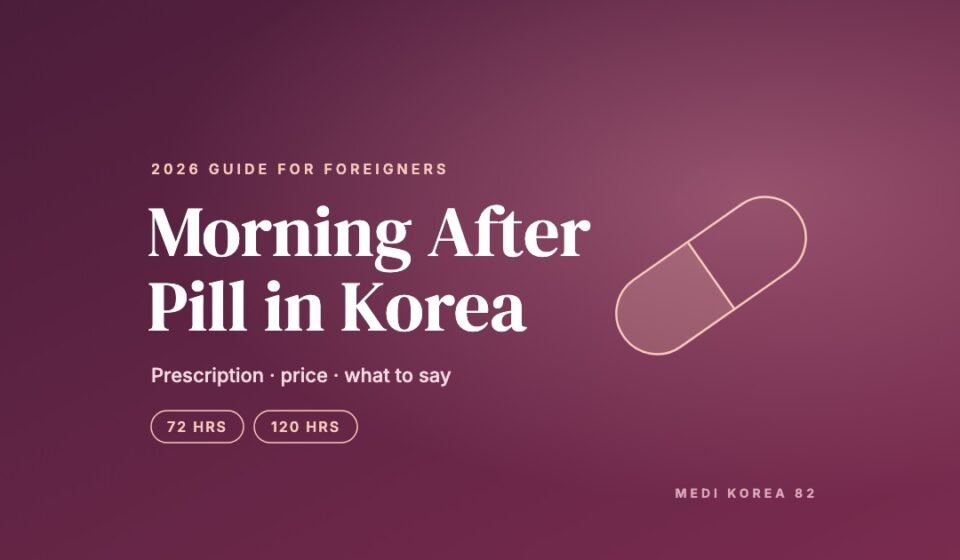
- Take it as soon as possible. Norlevo (levonorgestrel) is meant for use within 72 hours, and ellaOne (ulipristal) within 120 hours.
- Expect to pay roughly US$23–38 (₩30,000–₩50,000) for the visit and the pill together. It isn’t covered by national health insurance, so having NHIS doesn’t change the price much.
Dollar amounts use the November 2026 exchange rate (₩1,000 ≈ US$0.75). Prices vary by clinic.
Why You Need a Prescription in Korea
Korea has debated moving the morning after pill to over-the-counter status for more than a decade. The government tried in 2012, but the plan was dropped after objections from doctors’ groups and religious organizations. Civic groups were still calling for the change in 2026, and Japan made a levonorgestrel pill available at pharmacies in February 2026, but in Korea a doctor’s prescription is still required.
Regular birth control pills are a different story. Some of them are sold at Korean pharmacies without a prescription, so don’t be confused if a pharmacist offers those. They are not emergency contraception.
Where to Go
Women’s clinics (산부인과)
This is where I would go first. Women’s clinics handle this every day, the consultation is usually short, and some clinics in big cities have staff who speak English. Search a map app for “산부인과” to find the nearest one, and call ahead if you want to check opening hours.
General clinics
A doctor at a general clinic, such as internal medicine (내과) or family medicine (가정의학과), can also write the prescription. This helps if there is no women’s clinic nearby.
Nights, weekends and holidays
If clinics are closed, an emergency room can prescribe it, though the visit costs more than at a regular clinic. Some clinics also open on Saturday mornings and Sunday, so it is worth checking a map app before heading to the ER. If you are new to Korean clinics, this step-by-step guide explains how a visit works: How to See a Doctor in Korea as a Foreigner
What to Say at the Clinic
You don’t need much Korean. Showing this sentence on your phone works: 사후피임약 처방 받고 싶어요 (sahu piimyak cheobang batgo sipeoyo), which means “I would like a prescription for the morning after pill.” The medical term is 응급피임약 (eunggeup piimyak, emergency contraceptive).
The doctor will usually ask when it happened, the date of your last period and whether you take any other medicine. Answering those honestly helps them choose the right pill.
ellaOne or Norlevo: Which Pill?
Korean clinics mainly prescribe two products. ellaOne contains ulipristal acetate and can be taken up to 120 hours (five days) after unprotected sex. Norlevo contains levonorgestrel and is meant to be taken within 72 hours. Both work better the sooner you take them, so I would not wait for the deadline. The doctor will decide which one suits you.
How Much It Costs
Because the pill is not covered by national health insurance, foreigners with and without NHIS pay about the same. The total for the consultation and the medicine usually comes to roughly US$23–38 (₩30,000–₩50,000), depending on the clinic and the product. An emergency room visit costs more. Prices differ between clinics, so ask at the reception desk if you want to know before you see the doctor.
Step by Step: From Clinic to Pharmacy
- Find a women’s clinic or general clinic that is open, and bring your passport or residence card.
- Tell the reception desk you want a prescription for the morning after pill (사후피임약).
- See the doctor for a short consultation and pay at the desk.
- Take the prescription to any pharmacy. There is usually one in the same building or close by.
- Take the pill as instructed, ideally right away.
If you are not sure how Korean pharmacies work, I explain what to expect here: Korean Pharmacy Guide for Foreigners
After Taking It
Some people feel nauseous or tired, or notice spotting, and your next period may come a little earlier or later than usual. If your period is more than a week late, take a pregnancy test. If you vomit within a few hours of taking the pill, or you have severe stomach pain, go back to the doctor.
The morning after pill is not meant as regular birth control. If you are staying in Korea for a while, ask the doctor about longer-term options at the same visit.
FAQ: Morning After Pill in Korea
Can I buy the morning after pill at a Korean pharmacy without a prescription?
No. Pharmacies in Korea can only give it to you with a doctor’s prescription.
Do I need health insurance?
No. It is not covered by national health insurance, so you pay the full price either way.
Can I bring my own from home?
If you can buy it in your country, packing one before a long trip is an option, as long as you follow Korea’s rules for personal medicine: Bringing Medication to Korea
Is it available on weekends?
Yes, through clinics that open on weekends or an emergency room. Call ahead or check a map app for opening hours.
This guide is general information, not medical advice. Sources: Korean news reports on emergency contraception rules (2012–2026), product information for ellaOne and Norlevo. Last checked November 2026.
Related Posts
Discover more from Medi Korea 82
Subscribe to get the latest posts sent to your email.