
Many people suffering from a herniated disc believe that the most important goal is to eliminate the pain as quickly as possible.
But what if the pain is actually a message?
What if radiating nerve pain is not simply something to suppress, but something that tells us what is happening inside the spine?
Understanding this idea can completely change how we approach recovery from a herniated disc.
And for many patients, it can mean the difference between temporary relief and long-term healing.
What Is Radiating Nerve Pain?
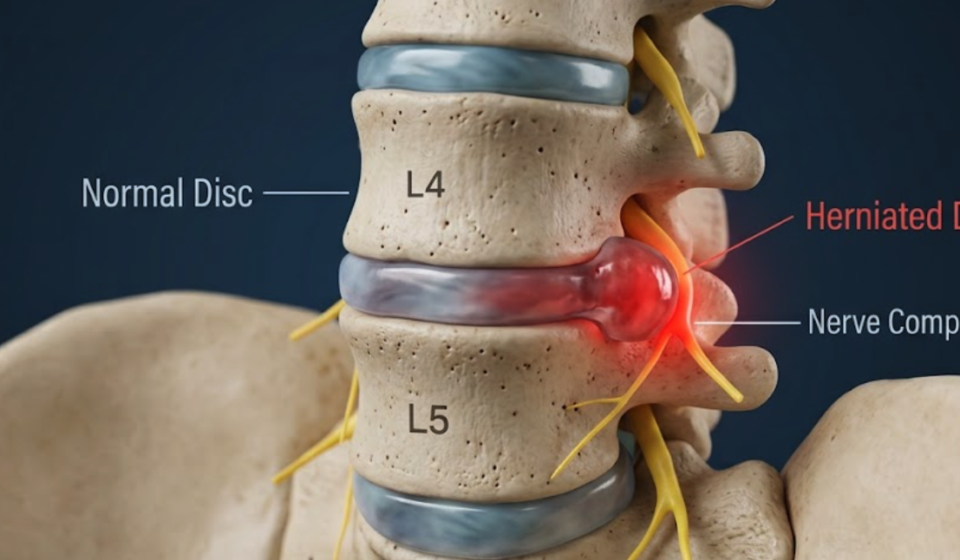
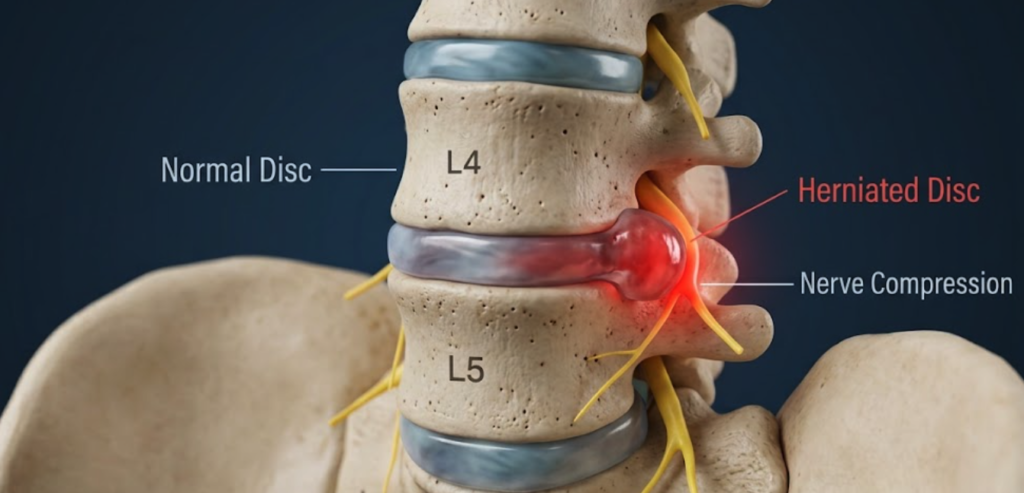
Radiating nerve pain, often called radicular pain or sciatica when it involves the leg, occurs when a spinal disc herniates and irritates nearby nerve tissue.
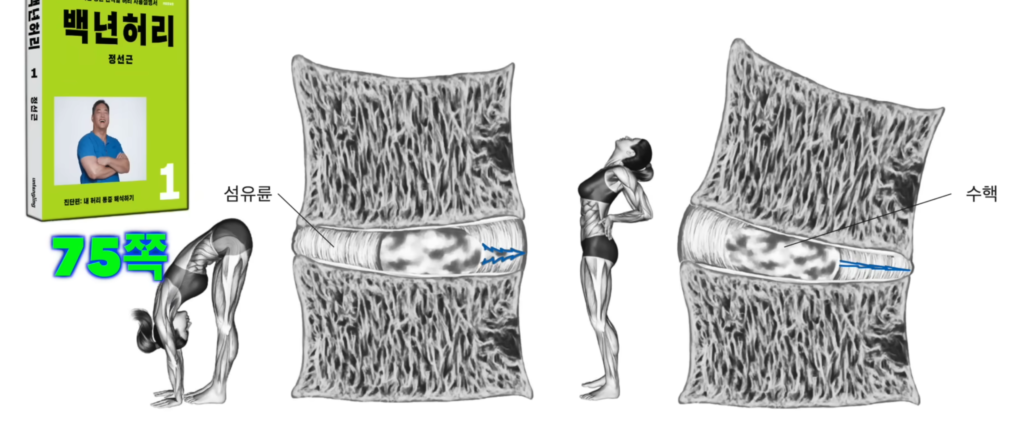
Inside every spinal disc is a gel-like center.
When the outer fibers of the disc tear, this material can push outward and leak beyond its normal boundaries.
As the disc material escapes, inflammation develops around nearby nerve structures.
One particularly sensitive area is the dorsal root ganglion, a cluster of sensory nerve cells located near the spinal nerve roots.
When this inflamed nerve tissue is compressed, stretched, or irritated, radiating nerve pain develops.
Why Does It Feel So Different From Ordinary Pain?
People experiencing radiating pain often struggle to describe it.
That is because the sensation constantly changes.
Patients frequently report:
- Electric shock-like pain
- Burning sensations
- Needle-like stabbing pain
- Pulling pain
- Deep aching
- Muscle twitching
- Severe cramping
- Tingling and numbness
- A feeling that the bone itself is hurting
Several of these sensations may occur simultaneously.
This is why radiating nerve pain can become one of the most distressing symptoms of disc herniation.
Radiating Pain Often Lasts Much Longer Than People Expect
Many patients assume that if they receive an injection or medication, the problem will quickly disappear.
In reality, radiating pain often persists for months.
Six months is not unusual.
Some patients continue struggling with symptoms for several years.
This reality leads to an important conclusion:
The goal is not simply to remove pain.
The goal is to manage and guide recovery while the injured disc heals.
A Real Patient Story
One particularly memorable case involved a man in his mid-forties who worked as a freight truck driver.
For four months, he had suffered severe radiating pain running down his left leg.
The pain extended through:
- The buttock
- The back and side of the thigh
- The calf
- The foot
- The big toe
His pain score was approximately 7 out of 10.
Walking became difficult.
Sitting was painful.
Standing hurt.
Even lying down offered little relief.
The pain had become a constant part of his life.
MRI Revealed a Major Disc Herniation
An MRI scan quickly revealed the cause.
Between the fourth and fifth lumbar vertebrae, a large disc extrusion had developed.
The herniation was pushing primarily toward the left side, matching his symptoms exactly.
The pressure and inflammation were affecting the nerves supplying the left leg.
His body had even begun compensating for the pain.
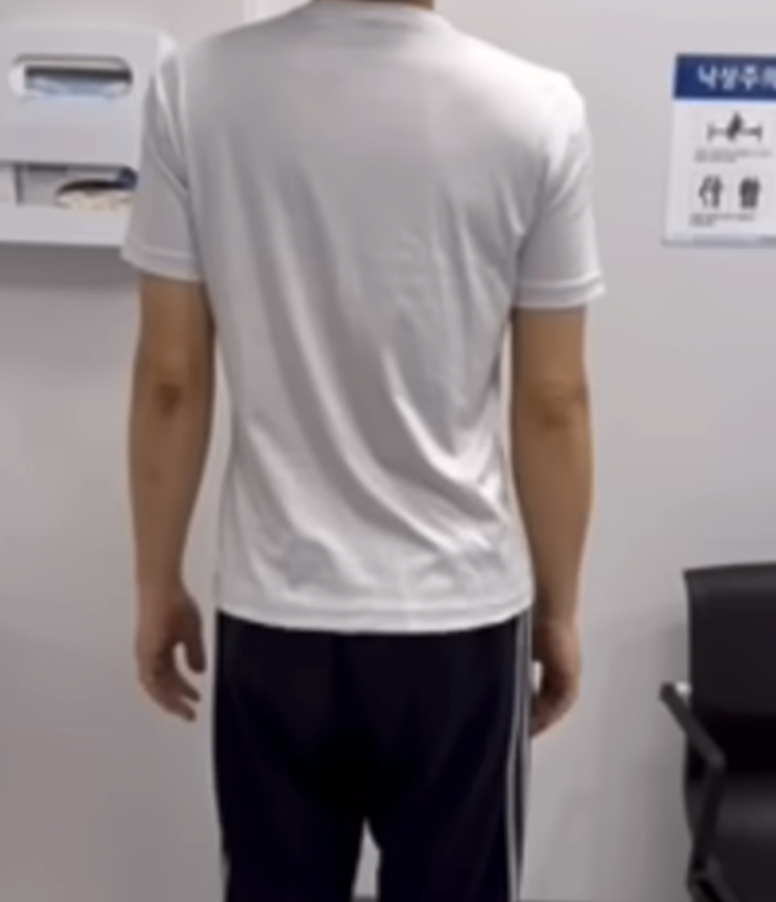
When standing, his spine leaned noticeably to one side as he unconsciously tried to avoid stressing the irritated nerve.
The Role of Epidural Steroid Injections
The patient underwent an epidural steroid injection.
Within a short period, his symptoms improved significantly.
His posture became straighter.
The pain decreased.
One month later, his pain level had dropped to about 1 or 2 out of 10.
For many patients, this might sound like complete success.
However, the story was not finished.
The Injection Was Never the Real Treatment
This is one of the most important lessons in herniated disc recovery.
The steroid injection reduced inflammation.
It did not repair the disc.
The herniated tissue was still present.
The torn disc still needed to heal.
The body’s natural recovery process still had to occur.
The injection simply created a more favorable environment for healing.
The Critical Period Begins When Pain Returns
Two and a half months later, the steroid effect gradually began fading.
As expected, some pain started returning.
His symptoms increased from around 1 or 2 points to approximately 3 to 5 points depending on the day.
This stage is where many treatment decisions become critical.
There were two options:
Option 1
Receive another steroid injection immediately.
Option 2
Allow the body more time to heal while carefully protecting the spine.
Many patients naturally want the first option.
Who wouldn’t want less pain?
However, there is a hidden risk.
When pain completely disappears, people often begin using their backs normally again.
Heavy lifting returns.
Poor posture returns.
Excessive spinal stress returns.
This can slow healing or even worsen the injury.
Understanding Spinal Hygiene
The patient chose a different path.
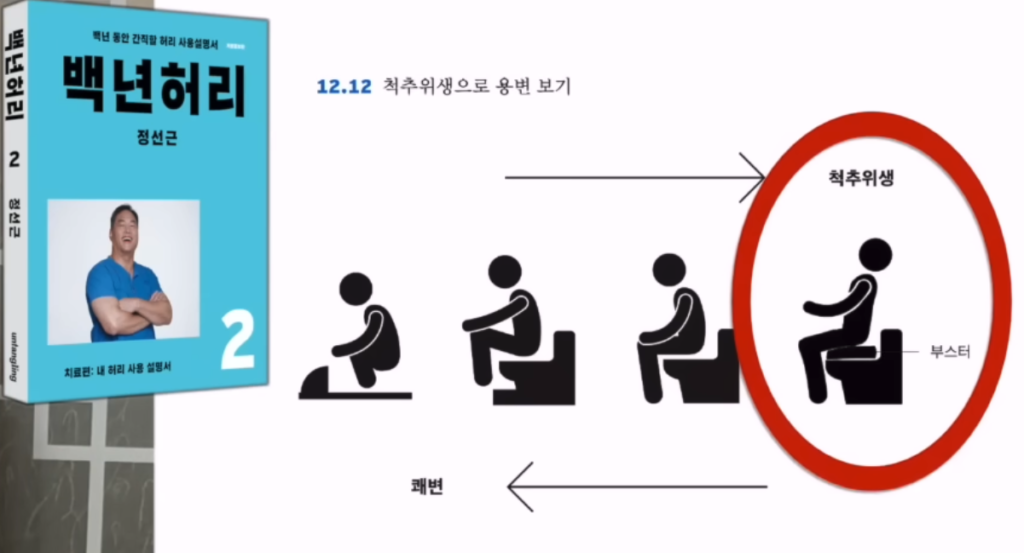
Instead of immediately receiving another injection, he focused intensely on spinal hygiene.
Spinal hygiene refers to the daily habits that protect spinal structures and encourage recovery.
These habits include:
- Avoiding harmful bending and twisting
- Maintaining proper posture
- Performing appropriate extension movements
- Being careful with lifting
- Modifying activities that stress the disc
The goal is simple.
Create an environment that allows the torn disc to heal.
Four and a Half Months Later
Approximately four and a half months after the original injection, he returned for follow-up.
The results were remarkable.
His posture was completely upright.
Pain levels remained stable around 1 or 2 out of 10.
Most importantly, the steroid medication was no longer active.
Any improvement at this stage reflected his body’s own healing process.
Although a follow-up MRI was not performed, the clinical picture strongly suggested that:
- Inflammation had significantly decreased
- The irritated nerve had calmed
- The disc herniation had likely reduced in size
His recovery was no longer being supported by medication.
It was being supported by healing.
The Biggest Mistake Many Patients Make
The most common mistake is focusing only on pain.
People often think:
“How can I make this pain disappear?”
A better question is:
“What is causing this pain?”
Radiating pain is not random.
It is information.
It is the body’s way of saying:
- The disc is injured.
- Inflammation is present.
- The nerve is irritated.
- The spine needs protection.
Suppressing the signal without addressing the cause often leads patients back to the same problem.
Why Understanding the Cause Matters
The patient in this case achieved a successful recovery because he understood what was happening.
Interestingly, during his first clinic visit, he completed an intake form.
When asked what he most wanted to resolve, his answer was not:
“Get rid of my pain.”
Instead, he wrote:
“Resolve the dorsal root ganglion inflammation.”
That answer revealed something important.
He understood the mechanism.
He understood the source of the symptoms.
And because he understood the cause, he was willing to focus on healing rather than simply pursuing temporary symptom relief.
Pain Is Not the Enemy
One of the most valuable shifts in mindset is understanding that pain itself is not necessarily the enemy.
Pain is communication.
The body is providing information about what needs attention.
When patients learn to interpret that message correctly, they often make better decisions about activity levels, posture, and long-term recovery.
The Real Secret to Managing Radiating Nerve Pain
The key lesson is simple:
Do not focus only on eliminating the pain. Focus on eliminating the reason for the pain.
Medications can help.
Injections can help.
Doctors can guide the process.
But long-term recovery largely depends on what patients do every day.
Proper posture.
Spinal hygiene.
Healthy movement patterns.
Patience.
Consistency.
And most importantly, understanding the injury itself.
Conclusion
Radiating nerve pain from a herniated disc can be one of the most painful experiences a person faces.
However, the pain is only part of the story.
The real challenge is helping the damaged disc heal while reducing inflammation around irritated nerves.
Temporary symptom relief has its place.
But lasting improvement comes from addressing the underlying problem.
In the end, the goal is not simply to feel better today.
The goal is to build a healthier, stronger spine that will continue functioning well for decades to come.
That is the true secret to managing radiating nerve pain and recovering from a herniated disc.