
Have you ever experienced recurring facial redness, inflamed bumps, or sudden breakouts and wondered whether you had acne, folliculitis, or rosacea? These three skin conditions can look similar, but their underlying causes and treatments are different. Choosing the wrong treatment may irritate the skin further, worsen redness, or make symptoms more difficult to manage.
Understanding the differences between acne, folliculitis, and rosacea is the first step toward choosing the right skincare routine and medical treatment.
1. What Is the Difference Between Acne and Folliculitis?
Acne is a chronic inflammatory skin condition that develops when hair follicles become clogged with oil, dead skin cells, and other debris. It can progress from clogged pores to inflammation, resulting in blackheads, whiteheads, pimples, and deeper lesions. Acne often requires ongoing treatment because it can persist or recur over an extended period.
Folliculitis, on the other hand, is inflammation of the hair follicles. It can occur when follicles are irritated or infected by bacteria, fungi, or other microorganisms. Friction, shaving, sweating, and skin damage may also contribute to certain types of folliculitis.
Unlike acne, folliculitis does not necessarily represent a long-term condition. However, it can recur when the underlying trigger remains present or when a person has a condition that predisposes them to repeated episodes.
Recurring facial bumps should not automatically be diagnosed as folliculitis. Other conditions, including rosacea, acne, and contact dermatitis, can produce similar symptoms. An accurate diagnosis is important because each condition may require a different treatment approach.
2. What Is Rosacea, and Why Is It Often Mistaken for Acne?
Rosacea is a chronic inflammatory skin condition that commonly affects the central face, including the cheeks, nose, forehead, and chin.
Common signs and symptoms include:
-
Persistent facial redness
-
Recurrent inflammatory bumps and pimples
-
Flushing that comes and goes
-
Burning, stinging, or increased skin sensitivity
-
Visible small blood vessels in some cases
Unlike typical acne, rosacea usually does not produce comedones, such as blackheads and whiteheads. Its symptoms may fluctuate, with periods of increased redness and inflammation followed by periods of relative improvement.
Rosacea can be difficult to recognize because its symptoms overlap with acne and other inflammatory skin conditions. Some people experience both acne and rosacea, which makes treatment decisions more complicated.
A dermatologist may diagnose rosacea by examining the pattern of redness, the distribution of inflammatory lesions, the presence or absence of comedones, and the patient’s history of symptom triggers.
3. Why Does Rosacea Flare Up Suddenly?
One important characteristic of rosacea is that symptoms can worsen rapidly, sometimes without an obvious change in skincare products or daily habits.
The skin barrier helps protect the skin from external irritants and maintain moisture. When this protective barrier is impaired, the skin may become more sensitive to environmental changes and everyday activities.
Potential rosacea triggers include:
-
Hot weather and sudden temperature changes
-
Hot showers and excessive heat
-
Sun exposure
-
Alcohol and spicy foods in some individuals
-
Stress and emotional changes
-
Harsh cleansers, exfoliants, and irritating skincare products
Not everyone has the same triggers. Some people may tolerate a product or routine for a long time before experiencing a flare, while others react quickly to relatively minor irritants.
This is why a sudden facial breakout does not always mean that the skin needs stronger acne treatment. In some cases, the skin needs less irritation and more barrier-supportive care.
4. Why Acne Treatments Can Make Rosacea Worse
Acne and rosacea develop through different mechanisms, so treating them in exactly the same way can be problematic.
Acne treatment may involve topical retinoids, benzoyl peroxide, salicylic acid, or other medications that help reduce clogged pores and inflammation. Some treatments can cause dryness, peeling, irritation, and increased sensitivity, particularly when introduced too aggressively.
For people with rosacea-prone skin, harsh exfoliation, frequent squeezing, strong cleansers, and excessive use of active ingredients may aggravate redness and discomfort.
Oral isotretinoin, commonly known as an acne medication that reduces sebum production and affects skin cell turnover, can also cause significant dryness and irritation. Although it is used for selected patients with severe acne and may be considered for certain difficult-to-treat rosacea cases, it is not appropriate for everyone.
The key is to identify the underlying condition before choosing treatment. A medication that works well for acne may not be the best first-line option for a person whose main problem is rosacea-related redness and sensitivity.
5. How Can You Tell Acne, Folliculitis, and Rosacea Apart?
Although these conditions can resemble one another, several clinical features may help distinguish them.
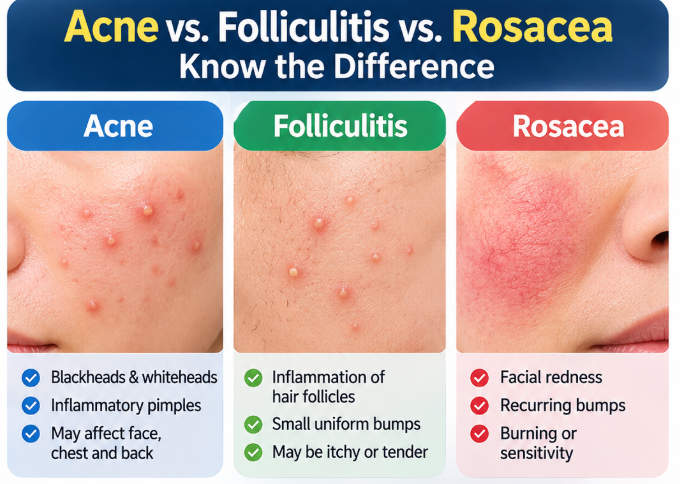
Acne: Often includes blackheads, whiteheads, and inflammatory pimples. Lesions may appear in different stages and commonly affect the face, chest, and back.
Folliculitis: Often appears as small, relatively uniform bumps or pustules centered around hair follicles. It may be itchy or tender, and the cause can be bacterial, fungal, or noninfectious.
Rosacea: Commonly causes central facial redness, flushing, and recurrent inflammatory bumps. Burning, stinging, and sensitivity may accompany the redness, while blackheads and whiteheads are generally absent.
These patterns are helpful clues, but they are not definitive diagnostic tests. Some conditions overlap, and acne and rosacea can occur together. Persistent or recurrent symptoms should be assessed by a qualified medical professional.
6. What Is the Best Treatment for Each Condition?
The most effective treatment depends on the diagnosis and the severity of the symptoms.
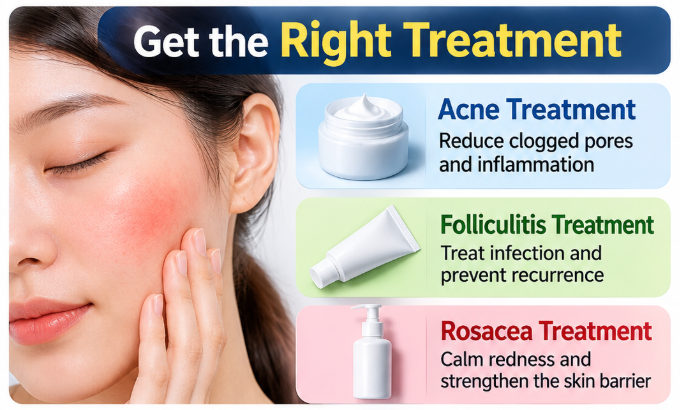
Acne treatment
Treatment may include topical retinoids, benzoyl peroxide, azelaic acid, or prescription medications. More severe acne may require oral treatment under medical supervision.
The goal is to reduce clogged pores, inflammation, and the risk of scarring while minimizing irritation.
Folliculitis treatment
Treatment depends on the cause. Some cases improve when friction, shaving irritation, or other triggers are reduced. Bacterial folliculitis may require targeted antimicrobial treatment, while fungal folliculitis requires a different approach.
Repeatedly treating all follicular bumps with acne medication without identifying the cause may delay appropriate care.
Rosacea treatment
Rosacea management focuses on reducing inflammation, controlling redness, and protecting the skin barrier.
Depending on the symptoms, treatment may include prescription topical medications, oral medications, and selected vascular laser or light-based procedures for persistent redness or visible blood vessels.
Gentle cleansing, moisturizer, daily sunscreen, and avoidance of personal triggers can also help reduce flare-ups.
The appropriate treatment plan should be individualized. Not every patient needs medication, and stronger treatment is not necessarily better.
7. Should You Use Steroid Creams for Persistent Facial Redness?
Topical corticosteroids can reduce inflammation in certain skin conditions, but they should not be used indiscriminately on the face.
Prolonged or inappropriate use of topical steroids can cause skin thinning, visible blood vessels, acne-like eruptions, and steroid-induced rosacea or periorificial dermatitis. Symptoms may also flare after stopping certain steroids.
Although corticosteroids are useful for specific diagnosed conditions, they are generally not a routine treatment for rosacea. If facial redness repeatedly returns after using a steroid cream, a medical assessment is important rather than repeatedly restarting the medication.
The same principle applies to oral medications and strong acne treatments: they should be selected according to the diagnosis, treatment goals, and potential side effects.
8. The Most Important Step Is an Accurate Diagnosis
Acne, folliculitis, and rosacea can all cause red bumps and inflammation, but their underlying mechanisms are different.
Acne is associated with clogged follicles and inflammation. Folliculitis involves inflammation of hair follicles and may result from infection or irritation. Rosacea is a chronic inflammatory condition characterized by facial redness, sensitivity, and recurring inflammatory lesions.
Because their symptoms overlap, self-diagnosis can lead to ineffective treatment or unnecessary irritation.
If facial redness, burning, or inflammatory bumps keep returning, consider consulting a dermatologist. The right diagnosis can help determine whether the skin needs acne treatment, targeted treatment for folliculitis, rosacea management, or a combination of approaches.
The most important principle is simple: identify the condition first, then choose the treatment. A carefully tailored treatment plan can help control inflammation, protect the skin barrier, and improve long-term skin health.
Medi Korea 82をもっと見る
購読すると最新の投稿がメールで送信されます。