
A Complete Guide for Foreigners Traveling to Korea for Cosmetic Surgery
✈️🩺
Korea is one of the world’s top destinations for cosmetic surgery, attracting thousands of foreign patients every year. While many guides explain how to choose a clinic or prepare for surgery, very few explain what you must prepare before traveling — especially if you’re flying internationally for a medical procedure.
This checklist provides practical, essential, and realistic guidance for foreigners planning a medical tourism trip to Korea. It covers documents, packing lists, accommodation, transportation, communication, recovery essentials, and safety tips.
📝 1. Essential Documents to Bring
Before flying to Korea, make sure you have all required documents. Missing even one can delay your surgery.
✔ Passport
Valid for at least 6 months.
✔ Visa (if required)
Most countries can enter Korea visa-free for short stays, but check your country’s requirements.
✔ Medical Records
Bring any relevant documents:
- Previous surgery records
- Allergy list
- Current medications
- Chronic illness information
✔ Consultation Screenshots or Emails
Keep your clinic’s confirmation messages easily accessible.
✔ Emergency Contact Information
Both your home country and Korea.
📱 2. Communication Essentials
Korea is extremely convenient, but communication can be difficult without preparation.
✔ Korean SIM Card or eSIM
Buy at the airport or online before arrival.
✔ Translation Apps
Google Translate or Papago are essential.
✔ Clinic Contact Saved
Save the clinic’s phone number, KakaoTalk ID, and address.
✔ Hotel Address in Korean
Taxi drivers prefer Korean text.
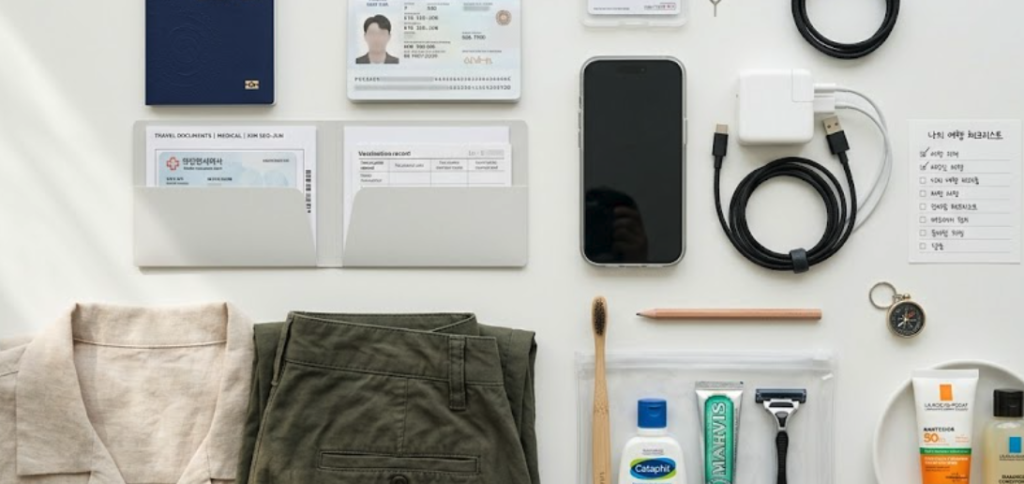
🧳 3. What to Pack for Surgery
Pack light, but bring the essentials that will make your recovery easier.
✔ Loose, front‑button clothing
Especially important for facial surgeries.
✔ Comfortable shoes
You’ll walk slowly after surgery.
✔ Travel pillow
Helps keep your head elevated.
✔ Cold packs
Useful for swelling (though clinics provide them).
✔ Personal hygiene items
Korean clinics provide basics, but bring your preferred items.
✔ Medication you regularly take
Bring enough for your entire stay.
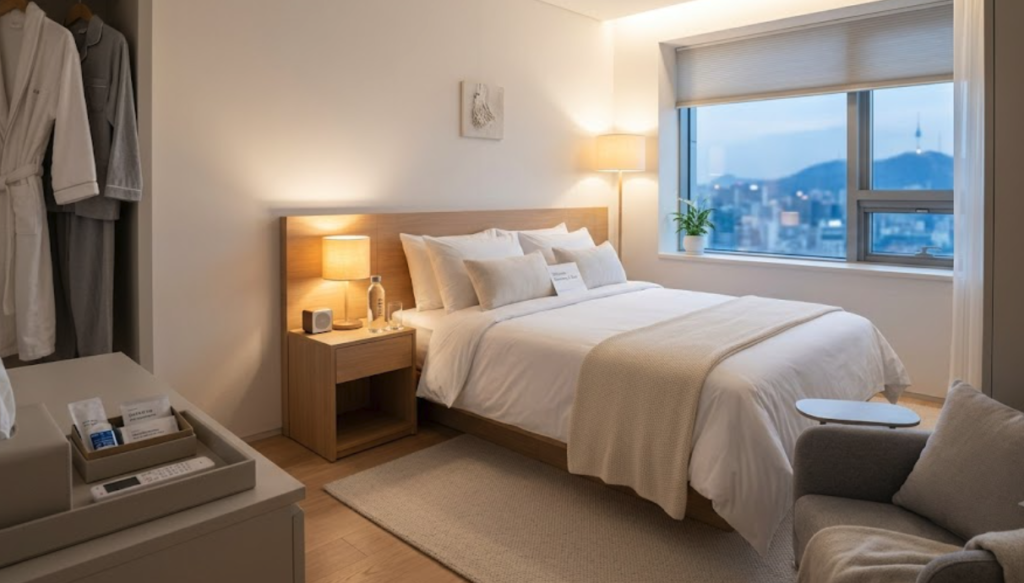
🏨 4. Choosing the Right Accommodation
Where you stay during recovery matters more than most people expect.
✔ Stay close to your clinic
Walking distance or a short taxi ride.
✔ Avoid steep hills
Some Seoul neighborhoods are very hilly.
✔ Choose a quiet hotel
Noise can affect sleep and recovery.
✔ Look for:
- Elevator access
- Clean environment
- Good heating/air conditioning
- Convenience stores nearby
🚖 5. Transportation Tips in Korea
Korea has one of the safest and most convenient transportation systems.
✔ Taxi apps
Use Kakao T or Uber Korea.
✔ Avoid public transportation right after surgery
Crowded spaces can be risky.
✔ Airport transportation
Take AREX, taxi, or private shuttle.
✔ Save clinic address in Korean
Drivers rely on Korean text.
🩺 6. Pre‑Surgery Preparation
Before surgery day, follow these essential steps.
✔ No alcohol for 7 days
Reduces swelling and bleeding risk.
✔ No smoking for 2 weeks
Improves healing.
✔ Stop blood thinners (doctor approval required)
Aspirin, ibuprofen, vitamin E, fish oil.
✔ Eat lightly the night before
Especially for surgeries requiring sedation.
✔ Remove nail polish
Clinics need to check oxygen levels.
💆 7. Post‑Surgery Recovery Essentials
These items will make your healing process much easier.
✔ Ice packs 🧊
For swelling control.
✔ Gauze & cotton pads
Clinics provide some, but extra is helpful.
✔ Ointments
Use only what the clinic recommends.
✔ Compression garments
Required for liposuction, facelift, jawline surgery.
✔ Soft foods
Korean porridge (죽) is perfect.
✔ Bottled water 💧
Hydration is essential.
🕒 8. How Long You Should Stay in Korea
This is one of the most important parts of medical tourism planning.
✔ Facelift / Neck Lift
10–14 days
✔ Rhinoplasty
7–10 days
✔ Eyelid Surgery
7–10 days
✔ Fat Grafting
3–5 days
✔ Thread Lift
1–2 days
✔ Liposuction
10–14 days
✔ Breast Surgery
10–14 days
Always add extra days in case swelling lasts longer than expected.
🏥 9. Using Korean Recovery Centers
Korea has specialized recovery centers designed for foreign patients.
They offer:
- 24/7 nurse monitoring
- IV hydration
- Swelling treatments
- Medication management
- Meal service
- Transportation to clinic
- Private rooms
- Oxygen therapy
Recovery centers are ideal for foreigners traveling alone.
⚠️ 10. Safety Tips for Foreign Patients
Stay safe and avoid complications.
✔ Avoid spicy food for a few days
It increases swelling.
✔ Sleep with your head elevated
Especially after facial surgery.
✔ Avoid saunas and hot baths
Heat increases swelling.
✔ Do not drink alcohol
At least 1 week after surgery.
✔ Do not touch or massage surgical areas
Unless instructed.
✔ Keep clinic contact saved
In case of emergency.
Korea is one of the safest and most advanced countries for cosmetic surgery, but proper preparation is essential for a smooth medical tourism experience. With the right documents, packing list, accommodation, and recovery plan, your trip will be comfortable, safe, and successful.
🔗 Recommended Links