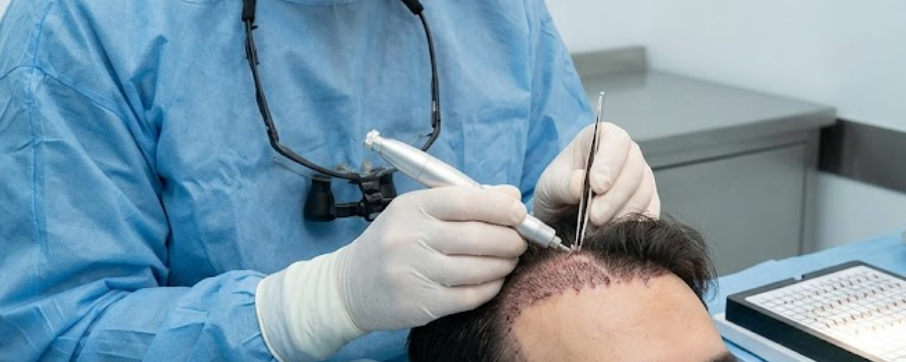

Korea has become one of the world’s most trusted destinations for hairline correction and hair transplant surgery. Known for its natural aesthetic style, advanced surgical techniques, and high survival rates, Korea—especially the Gangnam district—has developed a global reputation for creating refined, youthful, and balanced hairlines. Foreign patients visit Korea not only for hair restoration but also for cosmetic hairline reshaping, a uniquely Korean approach that blends artistry with medical precision.
This comprehensive guide explains everything foreign patients should know about Korean hairline correction and hair transplant procedures. From design philosophy to surgical methods, recovery timelines, costs, and clinic selection, this article provides a complete overview to help international patients make informed decisions.
1. Why Korea Is a Global Leader in Hairline Surgery
Korea’s approach to hairline correction and hair transplantation is different from most countries. While many clinics worldwide focus primarily on treating baldness, Korean clinics specialize in both cosmetic hairline design and medical hair restoration.
Natural Aesthetic Philosophy
Korean surgeons prioritize balance, symmetry, and softness. The goal is not just to add hair but to create a harmonious frame for the face.
Advanced Techniques
Korea is known for high‑density FUE, refined FUT, micro‑grafting, and ultra‑fine implantation tools that allow precise placement.
High Survival Rates
Korean clinics often achieve graft survival rates of 90% or higher due to advanced extraction and implantation methods.
Experience with Foreign Patients
Many Gangnam clinics treat thousands of international patients annually, offering English support, translators, and customized treatment plans.
Artistic Design
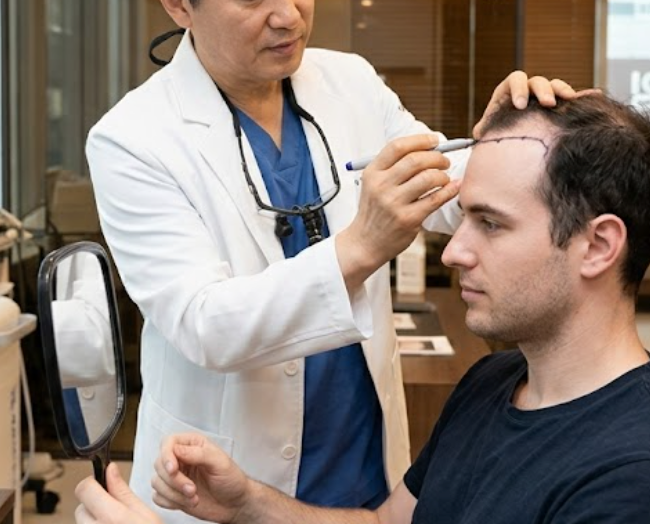
Korean hairline correction is considered an art form. Surgeons design hairlines based on facial proportions, gender, age, and ethnic characteristics.
2. What Is Hairline Correction?
Hairline correction (hairline plastic surgery) is a cosmetic procedure that reshapes the hairline to create a more balanced and aesthetically pleasing appearance. It is popular among both men and women, especially those who want:
- A softer, rounder hairline
- Correction of M‑shaped recession
- Lowering of a high forehead
- Filling in uneven or sparse areas
- Feminine hairline shaping
- Natural framing around the temples
Unlike traditional hair transplant procedures focused on baldness, hairline correction is about design, symmetry, and facial harmony.
3. Korean Hairline Design Philosophy
Korean surgeons follow specific principles when designing hairlines:
Soft Micro‑Irregularity
The front hairline is never drawn in a straight line. Instead, tiny irregularities create a natural look.
Density Gradation
The density gradually increases from the front to the back, mimicking natural hair growth.
Gender‑Specific Design
- Women: rounder, softer, lower hairline
- Men: slightly higher, more angular, masculine shape
Ethnic Considerations
Korean clinics are experienced in designing hairlines for various ethnicities, including Caucasian, Middle Eastern, Southeast Asian, and African patients.
Facial Proportion Matching
The hairline is designed to balance forehead height, eyebrow position, and facial width.
4. Hair Transplant Techniques Used in Korea
Korean clinics use several advanced techniques for hair transplantation.
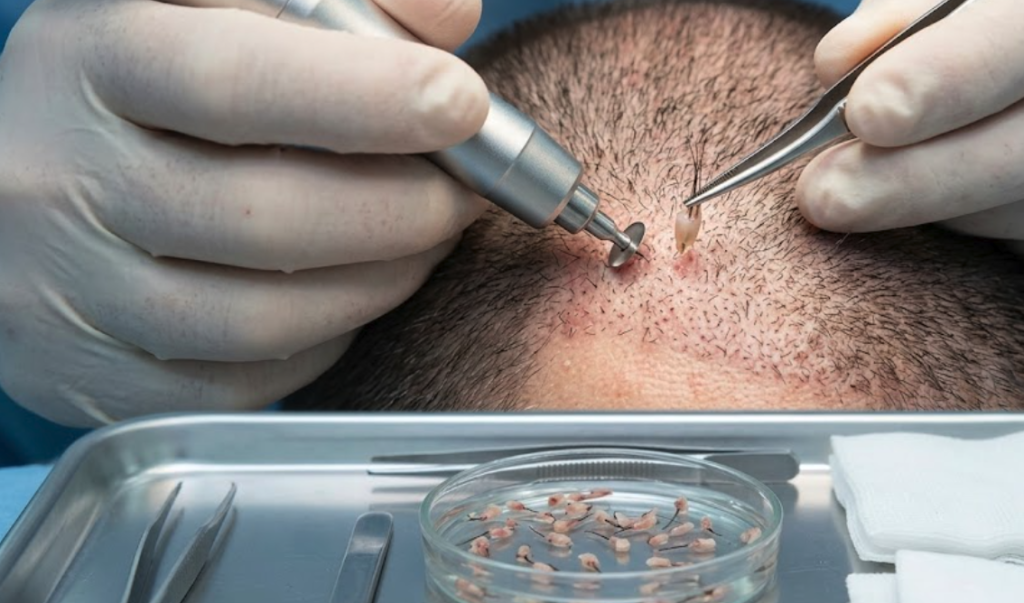
FUE (Follicular Unit Extraction)
- Individual grafts extracted one by one
- Minimal scarring
- Fast recovery
- Ideal for hairline correction and small areas
FUT (Strip Method)
- Strip of scalp removed from the back
- Higher graft yield
- Suitable for large bald areas
- Leaves a linear scar
Hybrid Method
Combination of FUE + FUT for maximum density.
Dense Packing Technique
Korean surgeons specialize in high‑density implantation for natural fullness.
Micro‑Grafting
Ultra‑fine grafts used for delicate hairline areas.
5. Areas Commonly Treated
Hairline
Lowering, reshaping, filling M‑shape, softening corners.
Temples
Creating natural temple peaks.
Forehead
Reducing height by lowering the hairline.
Crown / Vertex
Treating thinning or bald spots.
Mid‑Scalp
Increasing density.
Beard / Eyebrow Transplant
Popular among foreign patients seeking aesthetic enhancement.
6. The Procedure: Step‑by‑Step
Step 1: Consultation & Design
The surgeon analyzes facial proportions and designs the hairline.
Step 2: Extraction
FUE or FUT is used to harvest grafts from the donor area.
Step 3: Preparation
Grafts are cleaned, sorted, and prepared under microscopes.
Step 4: Implantation
Micro‑incisions are made, and grafts are placed at precise angles.
Step 5: Aftercare
LED therapy, scalp cleansing, and swelling management.
The procedure typically takes 4–8 hours depending on graft count.
7. Who Is a Good Candidate?
Hairline correction and hair transplant are ideal for patients who:
- Have a high or uneven hairline
- Want a softer or more feminine hairline
- Have thinning temples
- Experience early‑stage hair loss
- Want to improve density
- Prefer natural, long‑lasting results
- Want to correct M‑shape recession
Foreign patients often choose Korea for cosmetic hairline reshaping even without severe hair loss.
8. Recovery Timeline
Day 1–3
Redness, swelling, and scabbing appear.
Day 4–7
Scabs begin to fall off naturally.
Week 2–4
Shock loss may occur; transplanted hairs temporarily shed.
Month 2–3
New hair begins to grow.
Month 6
Visible improvement.
Month 12
Full results.
Foreign patients typically stay in Korea for 7–10 days after surgery.
9. Benefits of Korean Hairline & Hair Transplant Surgery
Natural Results
Korean surgeons specialize in soft, realistic hairlines.
High Survival Rates
Advanced techniques ensure long‑lasting results.
Minimal Scarring
FUE leaves tiny, barely visible marks.
Customized Design
Hairline tailored to each patient’s facial structure.
Advanced Aftercare
LED therapy, scalp cleansing, and swelling care.
Experience with Foreign Patients
Smooth communication and structured treatment plans.
10. Risks and Considerations
While safe, hair transplant surgery carries some risks:
- Swelling
- Redness
- Temporary shedding
- Folliculitis
- Uneven density
- Infection (rare)
- Poor design if done by inexperienced surgeons
Choosing a reputable Korean clinic significantly reduces these risks.
11. Cost of Hairline Correction & Hair Transplant in Korea
Prices vary depending on graft count and clinic reputation.
Hairline Correction (1,500–3,000 grafts)
₩2,500,000 – ₩6,000,000
(USD $1,900 – $4,500)
Full Hair Transplant (3,000–5,000 grafts)
₩4,000,000 – ₩10,000,000
(USD $3,000 – $7,500)
Eyebrow / Beard Transplant
₩1,500,000 – ₩4,000,000
(USD $1,100 – $3,000)
Korea offers competitive pricing compared to the US, Europe, and Singapore.
12. How to Choose the Right Clinic
Foreign patients should consider:
- Surgeon’s experience
- Before‑and‑after photos
- Hairline design style
- Graft survival rate
- English support
- Aftercare system
- Clinic reputation
Gangnam is the most popular district due to its concentration of skilled surgeons.
Korean hairline correction and hair transplant surgery offer foreign patients a safe, natural, and effective way to enhance their appearance. Whether you want to reshape your hairline, increase density, or restore lost hair, Korea provides world‑class expertise trusted by patients worldwide.
With advanced techniques, artistic design, and comprehensive aftercare, Korea remains one of the best destinations for hairline and hair transplant procedures.
🔗 Recommended Links


[…] Korean Hairline Correction & Hair Transplant: What Foreign Patients Should Know […]
[…] Korean Hairline Correction & Hair Transplant: What Foreign Patients Should Know Author […]