

Why Korea Is One of the Best Countries for Health Screening
Korea is globally recognized for its advanced medical check-up system, offering fast, accurate, and comprehensive health screening services.
Every year, thousands of foreigners visit Korea specifically for medical check-ups due to the country’s modern facilities, efficient processes, and affordable pricing.
This guide explains how medical check-ups work in Korea, what tests are included, how much they cost, and why Korea is one of the best destinations for preventive healthcare.
◆ 1. Why Korea Is Famous for Medical Check-Ups
Korea’s medical check-up system is known for:
- Highly advanced diagnostic technology
- Fast and efficient testing process
- Comprehensive screening packages
- Accurate early detection
- Affordable pricing compared to Western countries
- English-friendly medical tourism services
Korea’s health screening centers are designed to complete multiple tests in a single visit—often within 2–3 hours.
◆ 2. Types of Medical Check-Up Programs in Korea
Korean hospitals offer various check-up packages depending on age, gender, and health concerns.
➤ Basic Check-Up
Includes:
- Blood test
- Urine test
- Chest X-ray
- Blood pressure
- BMI
- Vision & hearing test
➤ Comprehensive Check-Up (Most Popular)
Includes:
- Full blood panel
- Abdominal ultrasound
- Thyroid ultrasound
- ECG
- Lung function test
- Cancer markers
- Nutritional analysis
➤ Premium Check-Up
Includes:
- Brain MRI
- Heart CT
- Colonoscopy
- Gastroscopy
- Advanced cancer screening
- Hormone analysis
➤ Women’s Check-Up
Includes:
- Breast ultrasound
- Mammography
- Cervical cancer screening
- Hormone tests
➤ Men’s Check-Up
Includes:
- Prostate exam
- Testosterone test
- Abdominal ultrasound
◆ 3. What to Expect During a Korean Medical Check-Up
➤ Step 1: Registration
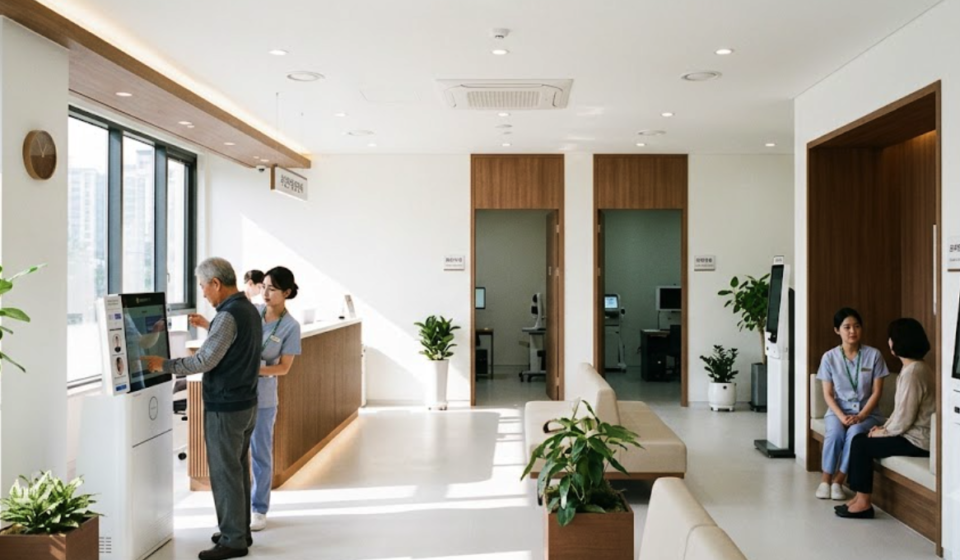
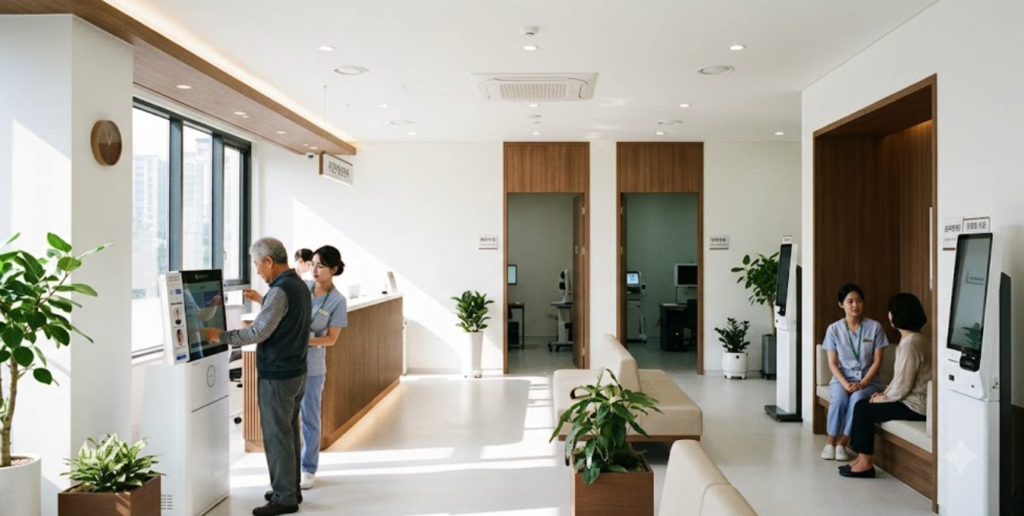
You check in at the reception or digital kiosk.
➤ Step 2: Changing Room
You receive comfortable medical clothing for the tests.
➤ Step 3: Sequential Testing
Korean centers guide you through each test in order:
blood test → X-ray → ultrasound → ECG → consultation.
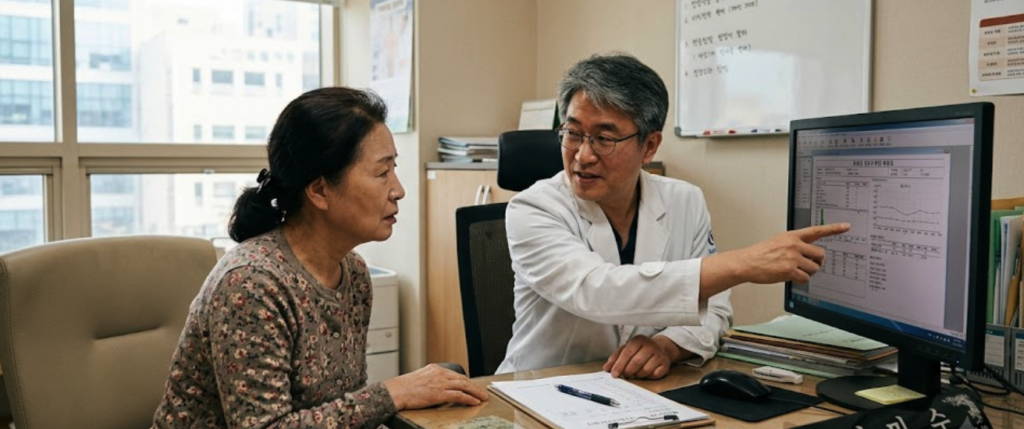
➤ Step 4: Doctor Consultation
A doctor explains your results in detail.
➤ Step 5: Final Report
You receive a printed and digital report, often same day.
Korea’s system is extremely organized, minimizing waiting time.
◆ 4. Popular Tests Included in Korean Check-Ups
◎ Blood Tests
- Cholesterol
- Liver function
- Kidney function
- Thyroid
- Diabetes
- Cancer markers
◎ Imaging Tests
- Ultrasound
- X-ray
- CT
- MRI
◎ Heart Tests
- ECG
- Stress test
- Cardiac CT
◎ Digestive Tests
- Gastroscopy
- Colonoscopy
◎ Specialized Tests
- Bone density
- Hormone analysis
- Allergy testing
◆ 5. Cost of Medical Check-Ups in Korea
Prices vary depending on the hospital and package.
Dollar amounts use the November 2026 exchange rate (₩1,000 ≈ US$0.75). Prices change often.
Basic Check-Up
US$75–$150 (₩100,000–₩200,000)
Comprehensive Check-Up
US$220–$520 (₩300,000–₩700,000)
Premium Check-Up
US$750–$1,900 (₩1,000,000–₩2,500,000)
Women’s / Men’s Packages
US$150–$450 (₩200,000–₩600,000)
Compared to the US or Europe, Korea offers high-quality screening at significantly lower prices.
◆ 6. Why Foreigners Choose Korea for Health Screening
- Fast and efficient process
- Modern diagnostic equipment
- Highly trained medical staff
- Affordable pricing
- Same-day results
- English-speaking coordinators
- High accuracy in early detection
Korea is one of the safest and most reliable countries for preventive healthcare.
◆ 7. Tips for Foreign Patients
- Avoid eating for 8 hours before the check-up
- Wear comfortable clothing
- Bring passport or ID
- Arrive 10–15 minutes early
- Ask for English reports if needed
—
✦ Final Thoughts
Korea’s medical check-up system is one of the most advanced in the world.
With fast testing, accurate results, and affordable pricing, Korea is an excellent destination for foreigners seeking reliable preventive healthcare.
Health screening is a big reason Korea now sees more than 2 million foreign patients a year. Who are they, and why do so many come back? Read more: Why 2 Million Foreign Patients Keep Coming Back to Korea
Related Posts



Discover more from Medi Korea 82
Subscribe to get the latest posts sent to your email.