

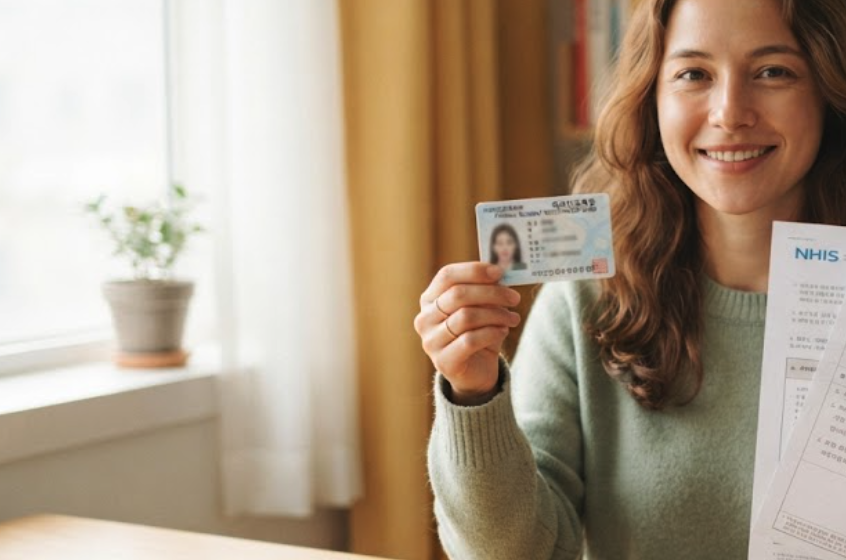
National Health Insurance Korea for Foreigners (2026): Cost, Who Must Join & How to Pay

If you live in Korea on a long-term visa, you will almost certainly be enrolled in Korea’s National Health Insurance Service (NHIS). For most foreigners this is good news: NHIS cuts the cost of clinic visits, hospital care and prescriptions, and gives you access to Korea’s health check-up program. But the rules on when you are enrolled and how much you pay depend on your visa and your job.
This guide explains who must join, when coverage starts, what it costs in 2026, how to pay, the NHIS phone number for foreigners, and what international students need to know. Last updated: November 2026.
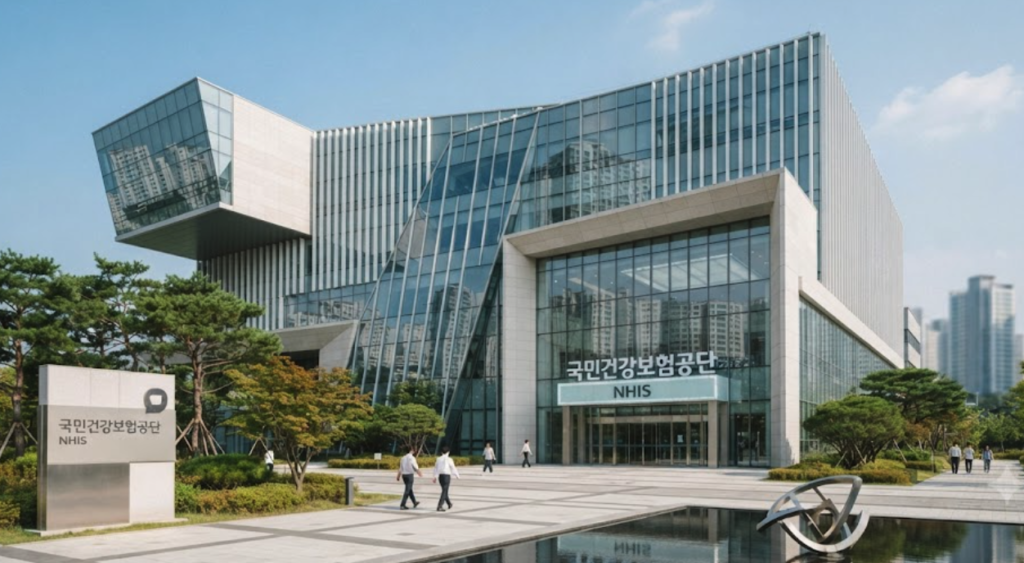
Quick Answer: NHIS for Foreigners in 2026
Dollar amounts use the November 2026 exchange rate (₩1,000 ≈ US$0.75). Prices change often.
- Is it mandatory? Yes, for most foreign residents with an Alien Registration Card (ARC).
- When does it start? From your first day of work if you are employed. Students on D-2 visas are enrolled from entry. Most other residents are enrolled after 6 months in Korea.
- How much is it? Employees pay a share of their salary. Foreign regional subscribers with little or no Korean income pay a minimum of about US$120 (₩158,630) per month in 2026. Eligible D-2 students pay about US$59 (₩79,320).
- What does it cover? Most medically necessary care, with a co-payment. Cosmetic procedures are not covered.
Who Must Join NHIS, and When?
There are two ways foreigners are covered: as an employee subscriber through a job, or as a regional subscriber who pays on their own.
| Your situation | Type | When coverage starts |
|---|---|---|
| Working for a Korean employer (E-7, E-9, H-2 and other work visas) | Employee subscriber | From the date you start work |
| International student (D-2) | Regional subscriber | From your entry date (first entry: ARC registration date) |
| Marriage migrant (F-6) or permanent resident (F-5) | Regional subscriber | From your foreigner registration date |
| Most other long-term visas, including language students (D-4) and freelancers | Regional subscriber | After 6 months of continuous stay in Korea |
Your spouse and children can sometimes be added as dependents of an employee subscriber, if they meet NHIS income and residency conditions. Regional subscribers are usually enrolled together with family members who live with them.
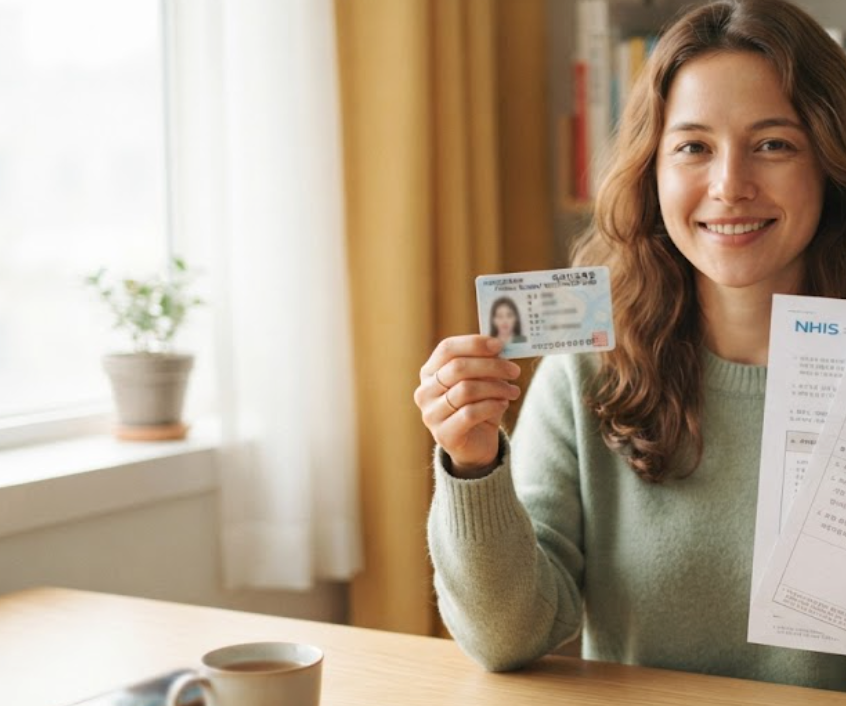
How to Enroll in NHIS: Step by Step
For most foreigners, enrollment is automatic. You do not have to apply, but you do need to make sure your information is correct and that you pay on time.
- Get your Alien Registration Card (ARC). Register at the immigration office after you arrive. NHIS uses your ARC and registered address.
- If you work: your employer reports you to NHIS. Your premium is deducted from your salary each month.
- If you are a regional subscriber: NHIS enrolls you automatically when you become eligible and mails a notice to your registered address. Keep your address up to date with immigration so you receive it.
- Set up payment. Premiums are billed monthly. You can pay by bank transfer, at a bank, or by automatic debit from a Korean bank account. Premiums are usually charged in advance for the month.
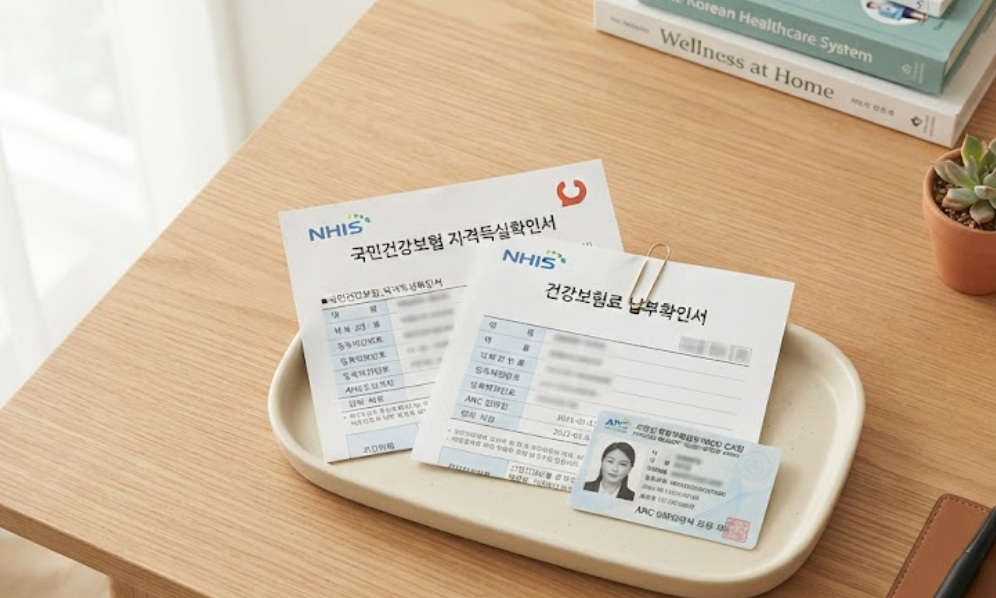
- Get your proof of coverage. You can request a certificate of eligibility at an NHIS branch, online, or through the NHIS app. At hospitals, your ARC is usually enough to apply insurance.
If you are unsure whether you are enrolled, call NHIS. The general number is 1577-1000, and NHIS also runs a foreigner help line at 033-811-2000 with English and other languages.
How Much Does NHIS Cost in 2026?
| Subscriber type | Monthly premium (2026) |
|---|---|
| Employee subscriber | Based on your salary. You and your employer each pay half of the health insurance premium. |
| Foreign regional subscriber (little or no income or property in Korea) | Minimum of about US$120 (₩158,630) (health insurance plus long-term care insurance) |
| Regional subscriber with higher income or property | Calculated from your income and property. It can be higher than the minimum. |
| D-2 international student | About US$59 (₩79,320), after a 50% reduction for eligible students |
Why is the minimum for foreigners higher than for many Koreans? Because NHIS cannot easily check income earned abroad, foreign regional subscribers are charged at least the average premium of all subscribers. The student reduction generally applies only if your annual income and property in Korea stay below set limits, so a well-paid part-time job can change your premium.
NHIS for International Students (D-2 and D-4)
- D-2 degree students are enrolled from their entry date (for a first entry, from the ARC registration date). Eligible students pay a reduced premium of about US$59 (₩79,320) per month in 2026.
- D-4 language students are usually enrolled after 6 months in Korea and pay the regional subscriber premium. Some may receive a smaller reduction, so check your notice.
- The premium is due by the 25th of each month. Some universities collect it or send reminders, but you are responsible for paying it.
- Many universities also require or offer a student group insurance plan. It can add extra coverage, but it does not replace NHIS.
If you leave Korea for a long break between semesters, ask NHIS how your coverage and premiums are handled while you are away, so you do not come back to unexpected arrears.
How to Pay Your NHIS Premium
Premiums for regional subscribers are billed every month. Foreign regional subscribers pay in advance, and the payment is due by the 25th of each month. Check the due date on your notice, because a late payment can quickly turn into arrears.
- Bank transfer to the virtual account number printed on your notice
- Automatic debit from a Korean bank account (the easiest way to avoid missing a month)
- At a bank counter or ATM, or at some convenience stores with your notice
- Online through the NHIS website or the NHIS mobile app
If you move, update your address with immigration within 15 days. NHIS sends notices to your registered address, and many foreigners fall behind simply because the bill went to an old address.
Your Health Insurance Card and ID at Hospitals
You do not need a separate plastic card to use NHIS. Since May 2024, clinics and hospitals in Korea must check your identity before applying insurance, so bring your ARC or passport to every visit. You can also use the mobile health insurance card in the NHIS app. If you forget your ID, you may have to pay the full price and claim the difference later.
What Does NHIS Cover?
- Clinic and hospital visits: you pay a co-payment, usually around 20–60% depending on the type of hospital and treatment.
- Prescription medicine: covered at the pharmacy with a doctor’s prescription. See our Korean pharmacy guide.
- Dental: basic treatment is covered, and scaling is covered once a year. Implants are partly covered only for older adults.
- Korean traditional medicine: some treatments such as acupuncture are covered.
- Health check-ups: regular national check-ups are free or low-cost for eligible members. See our medical check-up guide.
Not covered: cosmetic surgery and aesthetic treatments, most private hospital room upgrades, and many non-essential services. These are paid fully out of pocket.
What Happens If You Don’t Pay?
Unpaid premiums are a common problem for foreigners who did not know they were enrolled. If you fall behind, insurance benefits can be restricted until you pay, and unpaid premiums can also cause problems when you apply to extend your stay. If you received a bill you did not expect, contact NHIS right away rather than ignoring it.
Private Health Insurance in Korea for Foreigners
Private insurance and NHIS do different jobs. NHIS is the public system that most residents must join. Private insurance can only add to it, except in a few special cases.
- Before NHIS starts: if you must wait 6 months, buy travel or international health insurance for that gap.
- On top of NHIS: some Korean insurers sell supplementary plans to ARC holders that cover part of your co-payments and non-covered costs. Read the conditions carefully, especially for pre-existing conditions.
- Expat or international plans: useful if you want treatment abroad or private rooms, but you still pay NHIS premiums if you are required to join.
- Exemptions: some employees with equivalent coverage from their home country or employer can apply for an exemption. Ask your employer or NHIS before cancelling anything.
NHIS Contact Number and Offices for Foreigners
| What you need | Where to go |
|---|---|
| Help in English, Chinese, Vietnamese or Uzbek | Foreigner help line 033-811-2000 |
| General NHIS customer center (Korean) | 1577-1000 |
| Information in English online | NHIS English website (nhis.or.kr/english) |
| Certificates, payment problems, enrollment questions in person | Any NHIS branch office. Bring your ARC or passport. |
When you call, have your ARC number ready. If you cannot get through, the Korea Travel Hotline at 1330 can also help with interpretation.
When Does NHIS Coverage End?
Your coverage generally ends when your period of stay expires or when you leave Korea for more than a month. If you are leaving Korea for good, check with NHIS that your final premiums are settled before you go.
Frequently Asked Questions
Is national health insurance mandatory for foreigners in Korea?
Yes. Most foreign residents are enrolled automatically, either through their job or as regional subscribers once they meet the visa and stay conditions.
Can I join NHIS as soon as I arrive in Korea?
It depends on your visa. Employees are covered from their first day of work, and D-2 students from entry. Most other foreigners are enrolled after 6 months of stay. Until then, private travel or international health insurance is a good idea.
How much is health insurance in Korea for foreigners per month?
In 2026, foreign regional subscribers pay at least about US$120 (₩158,630) per month, and eligible D-2 students about US$59 (₩79,320). Employees pay a share of their salary instead.
What is the NHIS phone number for foreigners?
Call the foreigner help line at 033-811-2000 for English, Chinese, Vietnamese or Uzbek. The general number is 1577-1000.
Do international students have to pay NHIS in Korea?
Yes. D-2 students are enrolled from entry and pay a reduced premium of about US$59 (₩79,320) per month in 2026. D-4 language students are usually enrolled after 6 months.
When is the NHIS payment due for foreigners?
Foreign regional subscribers pay in advance by the 25th of each month. Automatic debit from a Korean bank account is the easiest way to avoid missing a payment.
Can I use private insurance instead of NHIS?
In most cases, no. Private insurance does not replace NHIS for regional subscribers. Some employees covered by equivalent insurance from their home country may be able to apply for an exemption, so ask NHIS or your employer.
Does NHIS cover cosmetic surgery?
No. Cosmetic surgery and aesthetic skin treatments are not covered. Medically necessary treatment, such as eyelid surgery for drooping lids that block vision, may be covered after a doctor’s assessment.
The Bottom Line
NHIS is mandatory for most foreigners in Korea, and it makes everyday medical care far more affordable. Know when your coverage starts, keep your address up to date, and pay your premiums on time. If anything in your bill looks wrong, call NHIS at 1577-1000 or the foreigner line at 033-811-2000.
This guide is for general information only. Premiums and rules change every year, so confirm your own situation with NHIS.
Related Posts
Discover more from Medi Korea 82
Subscribe to get the latest posts sent to your email.